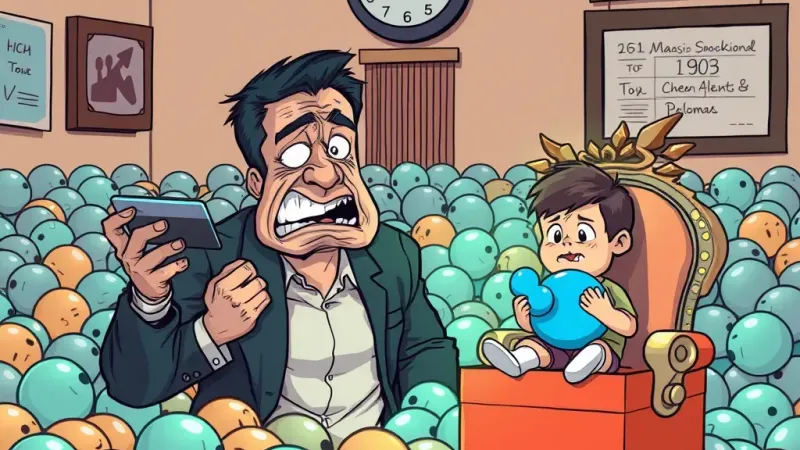
Reaching deep into their dwindling savings accounts to purchase emotional insurance for another year, exhausted adults across the nation have officially kicked off the holiday shopping season by violently elbowing each other over mass-produced plastic foam and interlocking brick systems.
According to retail analysts monitoring the frantic November migration, this year's economic engine is being entirely propelled by two distinct categories of merchandise: squishies—which are essentially stress balls marketed to seven-year-olds already experiencing existential burnout—and building sets, which allow children to experience the crushing disappointment of architectural engineering long before they enter the housing market.
"We are seeing unprecedented demand for items that cost forty cents to manufacture in a warehouse with zero labor regulations and retail for eighty-four dollars," said retail strategist Brenda Vance, staring blankly into the harsh fluorescent lighting of a suburban superstore while a toddler screamed in frequency normally reserved for distress beacons. "Parents aren't buying toys anymore. They are buying three weeks of quiet. They are purchasing a temporary truce in the ongoing war between their career ambitions and their children's lingering memory of their faces."
Industry insiders report that toy manufacturers have expertly tapped into the zeitgeist of modern childhood by creating products that require zero imagination and maximum floor-pain when stepped on in the dark at 3:00 AM. The building sets, specifically engineered to be missing one crucial flat 2x4 piece right at the climax of construction, teach children valuable early lessons about corporate supply chain failures and the inevitability of despair.
Meanwhile, the squishy market has exploded due to soaring rates of anxiety among elementary school students who are deeply concerned about interest rates, geopolitical instability, and whether their favorite YouTube streamer will get cancelled before Christmas Eve. Pediatric psychologists note that squeezing a slow-rising polyurethane cat until its face distorts beyond recognition is clinically proven to lower heart rates in children who have been over-scheduled since the age of three.
"My son doesn't want a bicycle or a pony," said local father Marcus Vance, clutching a holographic packaging box like a frontline infantryman holding a radio. "He wants a squishy neon avocado that smells faintly of industrial adhesive. If I don't secure this exact molded petroleum product, he has promised to look at me with the silent, soul-crushing disappointment that usually takes a teenager fifteen years to develop. I'd pay two hundred dollars for it. I'd pay my mortgage."
As the holiday rush intensifies, shopping malls have transformed into gladiatorial arenas where exhausted middle-management workers test their physical endurance against sleep-deprived mothers fueled entirely by cold brew and panic. Retailers have responded by implementing dynamic surge pricing on anything that can fit under a tree and keep a child quiet for longer than twenty minutes.
Economists point out that the obsession with these specific items represents a profound shift in how families celebrate the season of giving. Instead of traditional gifts that foster creativity or long-term engagement, today's holiday market is built entirely on transactional emotional appeasement. You hand your child a box containing a squishy narwhal, they hand you a fleeting moment of validation where they don't ask you why you look so sad, and the economic cycle of late-stage capitalism continues unabated.
"It’s beautiful in its own brutal way," Vance added, tossing three identical building sets into his cart to ensure maximum coverage against potential Christmas morning tantrums. "We take raw oil, turn it into toxic foam, ship it across an ocean, and trade it for the hollow illusion that we are good parents. Happy holidays to all, and to all a frantic search for parking."