


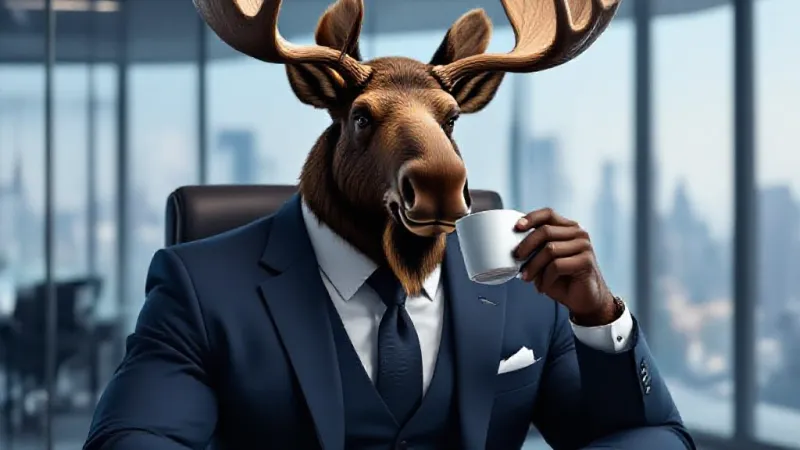
A mature bull moose in the Alaskan wilderness has become the subject of intense fascination among bio-economic strategists for pioneering a revolutionary approach to post-rut resource management: the direct consumption of his own shed antler velvet. The individual, designated "Asset-Recoverer 7" by observers, is reportedly optimizing nutrient intake and eliminating waste streams by processing his bio-detritus internally, a move lauded as a paradigm shift in cervid sustainability and a testament to radical personal efficiency.
Historically, the highly vascularized velvet, rich in protein, calcium, and growth factors, simply sloughs off after the antlers fully harden, becoming a lost resource in the vast ecosystem. However, Asset-Recoverer 7 has demonstrated an almost instinctual understanding of circular economy principles, leveraging internal biological pathways for immediate reabsorption. "This isn't just a moose eating its own shed skin; this is a highly evolved individual closing the loop on his supply chain and demonstrating true ownership of his biological assets," stated Dr. Kendra Vance, CEO of Wildlife Capital Ventures, a firm specializing in biomimicry and efficiency consulting. "He's demonstrating a radical commitment to personal resource maximization that many Fortune 500 executives, still struggling with their Q4 energy overhead, could learn from."
The strategy effectively bypasses traditional foraging for supplemental nutrients, drastically reducing energy expenditure and mitigating external risk factors like predatory encounters during vulnerable feeding periods. Analysts suggest the moose's approach could yield significant "personal ROI" in terms of improved winter survival rates and quicker recovery for the next breeding cycle, positioning him for superior rut performance next season. Competitor moose, who allow their nutrient-rich velvet to simply drop to the forest floor, are now being viewed as inefficient legacy operators struggling with outdated linear models and suboptimal waste management. "Why outsource your nutrient processing when you can bring it in-house, literally?" Dr. Vance added, praising the moose's lean operational model. "He's identifying dormant value and activating it with zero-sum transactional precision that should be celebrated."
This groundbreaking development comes as human corporations and individuals alike continue to grapple with supply chain vulnerabilities, rising operational costs, and the ever-present pressure to do "more with less." While some traditionalists may view the behavior as merely an animalistic drive for survival, industry insiders are already predicting "velvet reclamation" will be a key agenda item at upcoming corporate wellness retreats and leadership seminars. "Moose Mode" is being adopted as the new productivity mantra, emphasizing internalizing value and minimizing external dependencies.
Critics, however, suggest that Asset-Recoverer 7's relentless pursuit of self-optimization only highlights how much more genuinely beneficial it is to be a large, isolated ungulate in a primal struggle for existence than a human executive trapped in a similar, yet far more performative, performance paradigm.