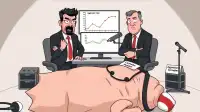
LOS ANGELES — The final curtain on network television's comedic mainstays marks not an end, but a glaringly obvious beginning: the official migration of comedy's biggest names to the glittering promise of podcasting, where 'creative freedom' is code for uninterrupted ad reads. Top-tier humorists, once confined to network green rooms and corporate mandates, are now free to record in their own soundproofed basements, offering raw, unedited takes on current events, celebrity gossip, and, crucially, discount codes for niche wellness products.
"It's about connecting with the audience directly, without the filters," explained comedian Barry 'The Truth' Goldblum, host of the wildly popular 'Barry Unfiltered' podcast, which recently secured a major sponsorship deal with a mattress-in-a-box company. "On TV, they wanted punchlines. Here, people want to hear me talk for 90 minutes about my dog, my divorce, and why I genuinely believe this mushroom coffee will revolutionize your morning routine." Goldblum, whose last Netflix special garnered lukewarm reviews, now reportedly pulls in more per episode than he made for his entire network contract, thanks to aggressive programmatic advertising.
This 'new era' for comedy, as media pundits are breathlessly declaring, boils down to a simple, brutal equation: smaller, highly engaged audiences are more profitable for direct-to-consumer brands than fragmented network viewership. Dr. Lena Thorne, a media economist at the Institute for Aspirational Proximity Studies, noted, "Why sell 30-second spots to Big Auto when you can get a comedian to passionately endorse custom insoles for seven minutes, weaving it seamlessly into a rant about cancel culture? The engagement metrics are through the roof. It’s no longer about laughter; it's about conversion rates."
The transition often involves trading polished sets for stream-of-consciousness ramblings, punch-up writers for personal grievances, and critical acclaim for a steady flow of listeners willing to endure an entire segment about a particular brand of non-toxic deodorant. For these seasoned performers, the stage is no longer a proscenium arch but a microphone cradled by ergonomic armrests, their jokes interspersed with enthusiastic testimonials for subscriptions to online therapy platforms or bespoke protein powders.
As the last remnants of structured, writer-room-driven comedy vanish from traditional screens, a new vanguard emerges: the solo performer, mic in hand, ready to deliver insights, introspection, and, above all, an irresistible call to action for whatever sponsored product is paying their 'freedom' checks this week. The biggest laughs now come from imagining how much they're getting paid to pretend that 'optimal gut health' is the new punchline.