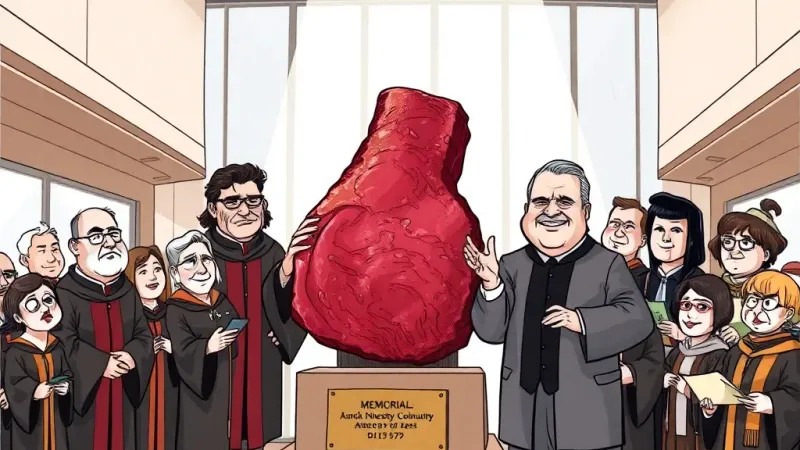
Kalamazoo, MI – Kalamazoo College is reportedly considering a proposal to install a permanent memorial in its main dining hall dedicated to the animals whose bodies have been processed and ingested by students and faculty. The initiative, spearheaded by a former student president, aims to acknowledge the "culinary journey" of campus food.
The push for the memorial comes from a 1994 student president, who, in a heartfelt letter to outgoing President Jorge G. Gonzalez, highlighted the "unseen sacrifices" made by countless chickens, cows, and other creatures for the sustenance of the academic community. The proposed installation, tentatively named "The Sustenance Memorial," would feature a rotating exhibit of species consumed that week, complete with interactive QR codes linking to their biological profiles and perhaps even a live stream of a factory farm, though that last point is still under debate.
"While we appreciate the... thoroughness of the proposal, our primary focus has always been on ensuring adequate caloric intake and managing the surprisingly complex logistics of ordering several thousand pounds of what are, fundamentally, dead animals each week," stated Brenda Chen, Kalamazoo College's long-serving Head of Dining Services, who has overseen the consumption of an estimated 3.7 million chicken breasts during her tenure. "A memorial feels like, well, a bit of a distraction from the actual eating, which is kind of the whole point of a dining hall."
Advocates for the memorial argue it will foster a deeper, more mindful connection between students and their meals, promoting a nuanced understanding of food origins beyond the typical "meat or vegetarian" binary. A spokesperson for the "Conscious Consumption Collective," a student advocacy group championing the proposal, suggested the memorial could include a "Wall of Remembrance" listing approximate numbers of livestock processed annually for campus consumption, perhaps with a digital counter displaying "protein units consumed" in real-time, updated every 15 seconds. Early estimates from the college's IT department indicate such a system would require dedicated fiber optic lines and several terabytes of data storage just to keep up with the daily chicken nugget count and the quarterly delivery of ethically sourced salmon.
"It's about acknowledging the full, often brutal, cycle of nourishment," explained Dr. Eleanor Vance, an adjunct professor of ethical gastronomy and critical food studies, speaking from an undisclosed location near the salad bar, reportedly due to the "intense emotional resonance" of the dining hall environment. "For too long, we've simply extracted calories from the plate without truly giving back to the... well, to the *idea* of the plate. This isn't just about the animals; it's about the very act of sustenance. And then the subsequent metabolic processing."
The college administration has convened a special bi-partisan task force, co-chaired by two alumni known for their differing views on the optimal temperature for cafeteria coffee, to evaluate the memorial's feasibility, budget implications, and potential impact on student digestion and campus mood. Sources close to the committee report significant debate over whether the memorial should include a section for forgotten leftovers or undercooked items, which some argue also represent "unfulfilled culinary potential" and "digestive regret." One committee member reportedly suggested a 'moment of silence' before each meal, but this was dismissed due to concerns about efficiency and potential interference with the pre-meal TikTok scrolling ritual.
Ultimately, the college hopes to find a way to honor the consumed without accidentally inspiring a spontaneous campus-wide fast, or worse, a demand for better vegan options.