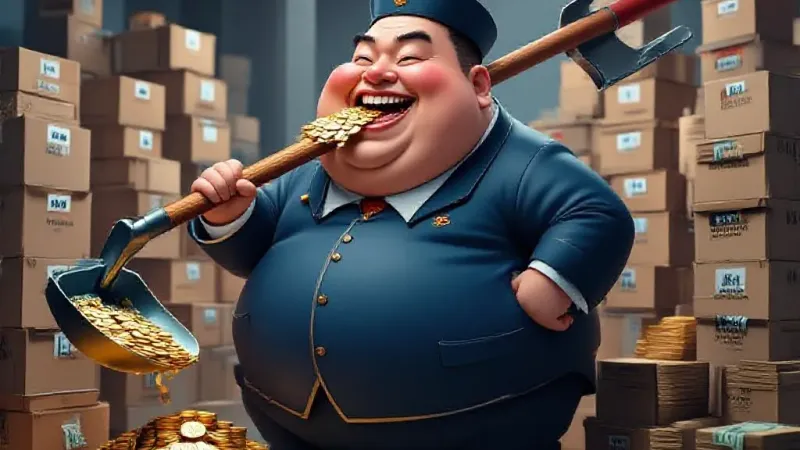
Beijing pushed back against G20 leaders this week after being urged to reduce its reliance on exports, with officials reportedly asking why the world’s leading economies expected China to disrupt a strategy that has proven demonstrably effective. The government characterized the G20’s concerns as "misguided" and bordering on "economic self-sabotage advice for a competitor."
"It's like telling a star athlete to stop scoring so many points because it makes the other team feel bad about their own performance," stated Commerce Ministry spokesperson Li Wei, speaking from behind a desk piled high with newly approved export permits. "Our factories are efficient. Our supply chains are robust. Our people are employed. We are simply meeting global demand, and if that demand happens to be for 80% of everything, whose fault is that? We don't see a problem with the process, only with others' capacity to keep up."
The G20’s communiqué, which called for a more "balanced global trade environment," was reportedly met with a collective shrug from Chinese economic planners. Sources within the Communist Party of China's Central Committee indicated that while they appreciated the "friendly suggestions," they saw little reason to deviate from a model that has lifted millions out of poverty and made China a dominant global economic power. "We are open to dialogue," one anonymous official told state media, "but not to suggestions that fundamentally undermine our prosperity. Perhaps other nations should focus on making things people *actually want to buy* at competitive prices, rather than complaining about who's making them now."
During a press conference, another official, who preferred to remain unnamed to "avoid further burdening our international partners with unwelcome truths," outlined China's perspective. "We’re essentially being asked to disarm ourselves in a global economic competition. The G20 says 'diversify your growth,' which to us sounds suspiciously like 'stop being so good at the thing you’re good at.' It's an interesting strategy from nations who simultaneously complain about inflation and then reject affordable goods."
Critics of China’s approach argue that its export focus creates unfair competition, floods markets, and stifles domestic industries elsewhere. However, Chinese officials maintain that the global market is simply "rewarding competence and value." They also challenged U.S. sanctions on Iran and European trade measures, suggesting that such actions were the *real* protectionism, designed to hinder China’s natural competitive advantage and punish consumers for seeking better deals.
As global markets continue to be saturated with goods stamped "Made in China," Beijing remains resolute: the only thing they're exporting less of is apologies for their economic success.