
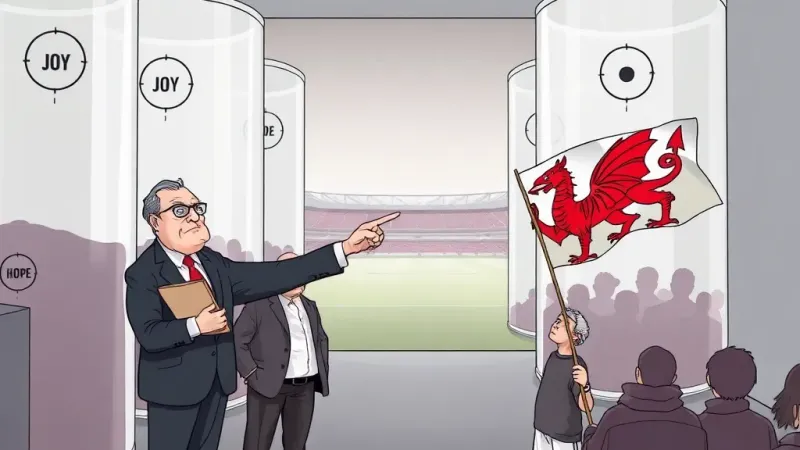
NEWPORT – Following Cardiff City’s dramatic 5-4 penalty shootout victory over Swansea City in the Bute Energy Welsh Cup final, national health officials have declared an unprecedented "emotional energy crisis" across Wales. The sudden and intense swing of public sentiment, from trailing 3-0 to a last-gasp equalizer in the 90th minute, through extra time, and the subsequent psychological gauntlet of a penalty triumph, has reportedly pushed the nation's collective emotional bandwidth to its absolute limit. This record-breaking sports drama has triggered urgent calls for widespread psychological intervention and government-funded de-stress programs to prevent societal collapse.
Dr. Elara Jenkins, head of the newly formed National Institute for Sports-Related Emotional Catastrophes (NISEC), stated during a hastily convened press conference that preliminary data indicates a steep decline in national morale post-euphoria. "The sheer metabolic output required to process 120 minutes of back-and-forth football, culminating in the psychological gauntlet of a penalty shootout, has left an unprecedented strain on the collective Welsh psyche," Dr. Jenkins explained. "Citizens are reporting symptoms ranging from acute fatigue, mild existential dread, and an inability to process any information that isn't delivered at a deafening volume, to a profound lack of interest in anything less dramatic than a meteor strike. We are, quite simply, out of emotional energy reserves, necessitating a national 'emotional load shedding' protocol."
In response, the Welsh Government has announced the immediate rollout of a "Post-Cup Emotional Recovery Programme," featuring mandatory mindfulness workshops, subsidized herbal tea, and a temporary ban on all news coverage of events more impactful than a well-behaved house cat. "While a win is undeniably a win, the societal cost-benefit analysis of such prolonged agony is becoming increasingly challenging," stated Minister for Public Well-being, Alun Griffiths. "We are asking ourselves: at what emotional price victory? And can the nation truly afford to feel this much, this intensely, again so soon? Our initial projections suggest that the emotional energy expended could power a small town for a year."
Local communities are already feeling the profound impact. Gareth Pritchard, a season ticket holder for 50 years, was found staring blankly at his television, still replaying the winning penalty on a loop. "Honestly, I think I aged ten years," Pritchard mumbled, clutching a lukewarm mug of camomile, his voice hoarse from celebratory screaming. "My wife said I looked like I'd just refinanced the house, not watched a football game. I just need a lie-down, preferably until next season, or possibly forever." Businesses have reported a noticeable dip in productivity as workers struggle to refocus on mundane tasks after experiencing such profound emotional peaks and valleys, with call centers reporting an 80% increase in callers simply asking to "talk about the game" for hours.
The long-term effects of this emotional energy crisis remain to be seen, but experts caution that future high-stakes sporting events may need to be accompanied by government-issued sedatives or a stern warning that "this much excitement is not suitable for all citizens, especially those with pre-existing conditions of caring too much." The Bute Energy Welsh Cup has truly lived up to its name, demanding an exorbitant amount of energy, and Wales is now paying the emotional price.