


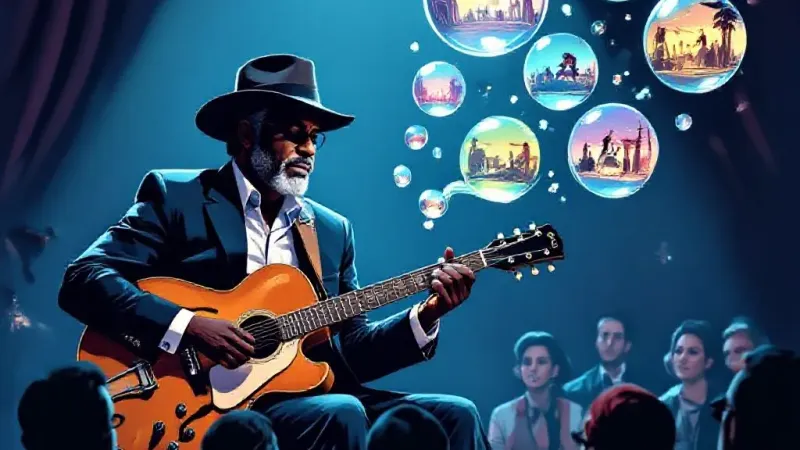
Boulder, CO — Local residents converged on the Chautauqua Auditorium Tuesday night for an annual pilgrimage to witness The Robert Cray Band, a blues institution whose performances now serve as an auditory clock chiming the inevitable march of time. Attendees, predominantly Gen Xers clinging to the last vestiges of their youth, reportedly swayed to the familiar melodies with an almost meditative resignation, celebrating not just the music, but the comforting predictability of their own fading relevance. The pre-show buzz wasn't about new album releases, but rather heated debates over who saw the band open for Eric Clapton in '92 and who still owned the vinyl.
“It’s not really about hearing anything new, is it?” pondered Deborah Jenkins, 56, adjusting her artisanal hemp scarf. “It’s about remembering that summer of ’89, when ‘Strong Persuader’ was everywhere and my knees didn’t sound like popcorn when I walked up stairs. Robert still has it, but more importantly, I had it back then.” Jenkins’ sentiment was echoed across the auditorium, where the collective murmur during breaks wasn't about the virtuosic guitar solos, but rather comparing hip replacement stories and arguing over who could still fit into their college jeans. Many concert-goers admitted to feeling a profound sense of anxiety when Cray launched into anything beyond the first few notes of "Smokin' Gun," fearing the delicate ecosystem of their nostalgia might be disturbed by an unfamiliar riff.
Sources close to the band, who wished to remain anonymous to avoid having to explain to Robert Cray what "anonymous sources" are, suggested the legendary guitarist views these shows with a detached professionalism. “He shows up, plays the hits, cashes the check, and contemplates the fleeting nature of human existence while nailing every note,” the source revealed. “It’s a well-oiled machine of nostalgia. The audience gets exactly what they paid for: a direct portal to a time before TikTok and global warming were daily anxieties. Honestly, sometimes I think Robert just closes his eyes and pictures himself at home, pruning his bonsai trees, while his fingers just keep going.”
Economists are now studying what they term the ‘Cray Effect,’ where the emotional currency of past hits appreciates exponentially over time, allowing artists to sustain lengthy careers by offering a reliably unchanged product. “It’s less a concert, more a live-action emotional reenactment of a simpler era,” explained Dr. Evelyn Reed, head of the Institute for Economically Viable Nostalgia Studies. “The audience isn’t seeking innovation; they’re paying for the sound of their own past, bottled and delivered with immaculate fidelity, ensuring minimal cognitive effort is required for maximum sentimental yield.” The institute's preliminary findings suggest that the average blues concert attendee burns fewer calories per hour than a sloth in a coma, a testament to the low-impact nature of passive reminiscing.
As the final, perfectly executed encore note hung in the crisp Boulder air, audience members departed, refreshed not by new musical discovery, but by the comforting assurance that some things, like the blues and the inexorable decay of the human body, can always be counted on.