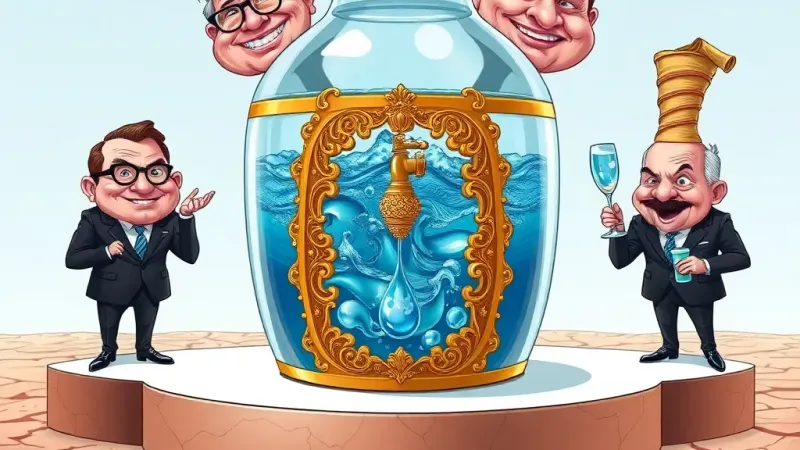
LONDON — In a move widely anticipated by anyone who understands basic economics and human nature, a coalition of the world’s ultra-rich has quietly acquired exclusive global licensing for all major advanced desalination and atmospheric moisture reclamation technologies, effectively cornering the market on future potable water. The consortium, operating under the umbrella of the "Global Hydration Futures Collective," finalized the acquisitions just as new studies confirm that coastal groundwater sources worldwide are becoming irreversibly salinized due to overabstraction and rising sea levels.
The patents cover everything from next-generation membrane filtration systems capable of rendering seawater "palatably pure" to proprietary atmospheric condensation units designed for private estate installation. "This isn't about hoarding," stated Sterling Thorne III, spokesperson for the Collective and CEO of HydroVest Capital, in a press briefing from his undisclosed sub-sea bunker. "This is about bringing stability to a volatile global resource market. Think of it as proactive asset management. We're simply ensuring that the future's most precious commodity remains accessible to those who are... prepared to invest in its sustainability." Thorne clarified that "investment" would translate to a tiered access model, with priority hydration services guaranteed for "premium tier stakeholders" and "legacy wealth partners."
Industry analysts were quick to praise the foresight. Dr. Evelyn Reed, a Senior Resource Strategist at the think tank "Prosperity First," noted, "This move streamlines the distribution chain. Instead of chaotic public works battling a losing war against salinity, we'll have a highly efficient, demand-driven system. It's truly a testament to free market principles: identify a problem, privatize the solution, and charge accordingly." She added that while some might view this as opportunistic, it merely formalizes the reality that "water, like any other essential service, finds its true value in scarcity."
Concerns from global aid organizations regarding billions of people facing acute water shortages were dismissed as "unproductive sentimentality." "Look, if you don't have the foresight to invest in your own hydration portfolio, that's hardly our problem," Thorne commented, adjusting a cufflink carved from pre-salinization ice. "We're not running a charity; we're running the future of global hydration. The free market will correct for… less efficient populations. It always does." The Collective plans to introduce a new line of "Hydro-Secure" residential hydration units next fiscal quarter, available exclusively to clients with verified net worths exceeding nine figures.
The move ensures that as global aquifers become unusable, those who can afford it will continue to enjoy pristine, desalinated water, while the rest of humanity can look forward to paying unprecedented prices for increasingly scarce, brackish alternatives.
In related 2, bottled water futures are now trading higher than crude oil.