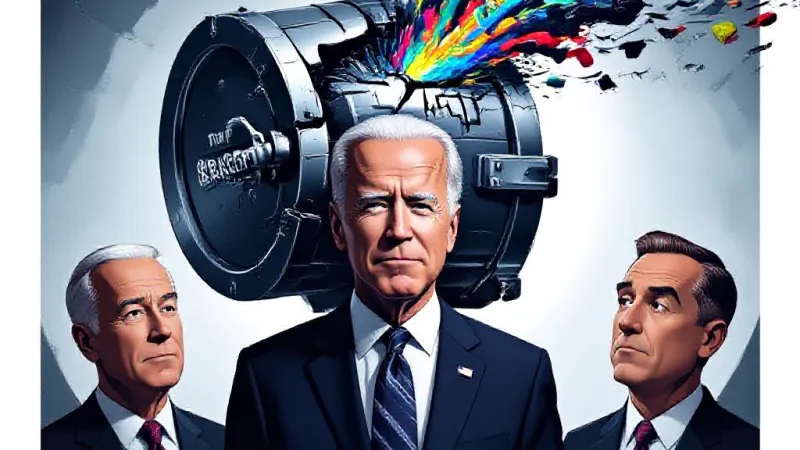
WASHINGTON — President Biden's legal team is preparing to ask a court to block the release of his conversations with a ghostwriter, arguing that the public is not yet equipped to handle the "unvarnished thought process" of a sitting commander-in-chief. The White House contends that the tapes, central to a classified-documents investigation, contain material so sensitive it could compromise the nation's capacity for narrative coherence.
According to filings, the legal challenge is less about the specifics of classified documents and more about preserving the "strategic ambiguity" inherent in high-level presidential communication. Releasing raw audio of what one filing termed "unfiltered primary source documentation of executive cognition" could create an unmanageable interpretive burden on the public, leading to widespread misreadings of presidential intent and, potentially, the very fabric of historical record.
"Our concern is not the content itself, but the public's potential misinterpretation of the *process* of recall," explained White House legal counsel Brenda Vance in an informal statement. "To release these recordings unadorned would be akin to showing the blueprint of a building to someone expecting a finished skyscraper. It’s confusing, it’s messy, and it fundamentally misunderstands the architectural genius involved in shaping a presidential legacy." Vance declined to specify which "architectural genius" was being referred to.
The ghostwriter, Mark Zwonitzer, who spent hours recording conversations with the President, has now found himself in the unprecedented role of being a de facto stenographer of presidential stream-of-consciousness. Sources close to the legal team suggest Zwonitzer’s contract notably lacked a clause stipulating a duty to "strategically re-sequence chronological data" or "optimize temporal fluidity."
The legal battle underscores a fundamental philosophical disagreement regarding the nature of presidential history. Is it a precise, unedited transcription of every utterance, or a carefully curated narrative designed to inspire confidence and project unwavering competence? The administration’s argument implicitly champions the latter, positing that an accurate historical account must prioritize perception over raw, unedited audio. They warn that unfettered access to a president's "nuanced conversational pacing" and "organic associative leaps" could set a dangerous precedent for future administrations. The very stability of American democracy, they suggest, relies on a degree of managed perception regarding its highest office.
Ultimately, the White House maintains that the presidency is not a live podcast where every unedited thought is broadcast, but rather a carefully produced special that demands a specific kind of sound design.