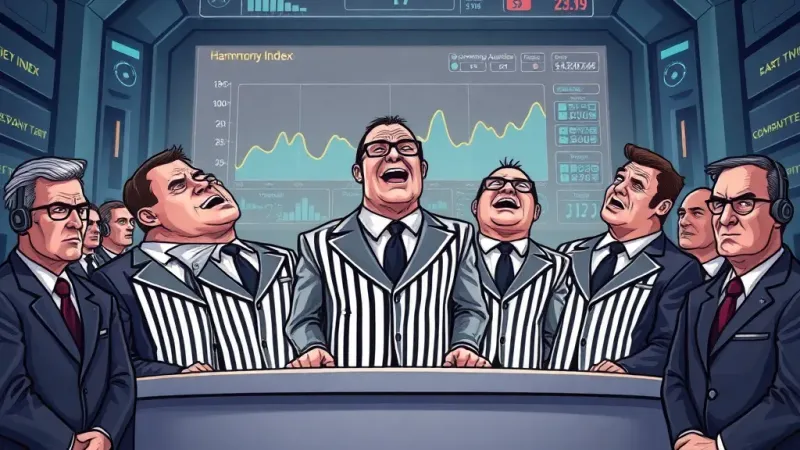
Eau Claire, WI – A groundbreaking new report from the National Institute for Social Cohesion (NISC) has revealed that attendance at local barbershop chorus concerts, such as the highly anticipated Indianhead Barbershop Chorus performance, is now a statistically significant predictor of regional and national stability. The study, which meticulously tracked sociological and economic data across 50 states over the past two decades, suggests a direct, quantifiable correlation between community engagement with structured four-part harmony and key socioeconomic metrics, including voter turnout and consumer confidence.
Dr. Elara Vance, lead researcher at NISC and primary author of the exhaustive 300-page report 'The Harmony Dividend: Barbershop's Unsung Role in Civic Order and Market Resilience,' noted the unexpected robustness of their findings. 'For years, economic and social scientists have looked at everything from GDP and unemployment rates to per capita artisanal pickle consumption as benchmarks for societal health,' Dr. Vance stated in a surprisingly somber press briefing. 'But it turns out, the number of people willing to sit through an evening of meticulously crafted a cappella standards without checking their phones is a far more reliable barometer. It indicates a foundational level of patience, shared cultural memory, and tolerance for structured enjoyment that we now understand directly underpins a functioning democracy and stable market economy.'
Financial markets and sovereign wealth funds have reportedly begun incorporating 'Barbershop Concert Index' (BCI) data into their quarterly forecasts, with institutional investors showing unprecedented interest in regions boasting robust local choral traditions. Concerns within the Federal Reserve were reportedly high last year when a slight, unpredicted dip in attendance for the Tri-County Harmonizers’ spring gala coincided almost precisely with a surprising uptick in regional skirmishes over municipal recycling protocols. Political pundits are now openly suggesting that a national mandate for community-level vocal performance groups might be a more effective long-term strategy for unity than any bipartisan infrastructure bill. The common wisdom, it seems, has entirely missed the obvious point: people who still appreciate a well-tuned dominant seventh chord and synchronized stage sway are probably not going to riot over potholes or destabilize global supply chains.
The Indianhead Barbershop Chorus, known locally for its pristine renditions of classics like 'Sweet Adeline' and 'The Old Mill Stream,' has seen an unprecedented surge in advance ticket requests, with several premium seats being purchased by delegates from the International Monetary Fund and a contingent from the World Bank. 'We used to just sing for the pure joy of it, and maybe to help fund the annual church bake sale,' remarked Clyde Barnaby, the chorus's venerable baritone section leader for 37 years, polishing his performance shoes nervously. 'Now, apparently, we’re literally holding the fabric of society together. Honestly, it puts a lot of pressure on hitting those low notes perfectly. One sour chord, and the NASDAQ could experience an unrecoverable plunge, triggering a global recession. It's a lot for a Tuesday night gig.'
The report concluded that if current trends continue, the rhythmic breathing exercises performed by barbershop quartets may soon replace central bank interest rate decisions as the primary mechanism for global economic stabilization.