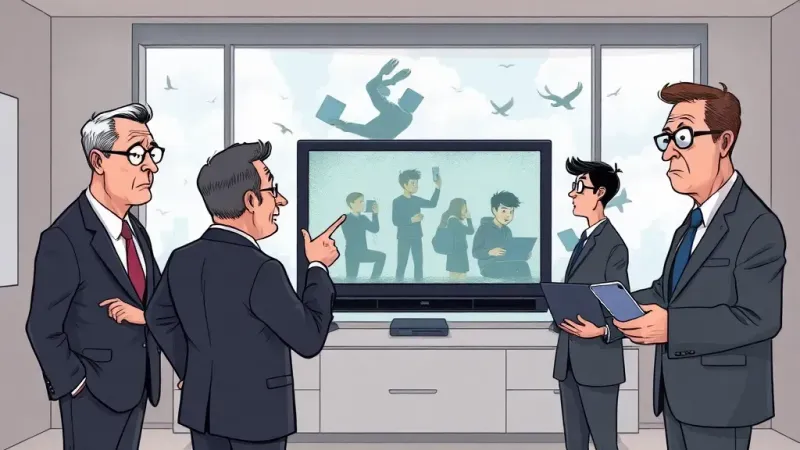
DETROIT — After decades of significant investment, leading automotive manufacturers have collectively begun to acknowledge a burgeoning trend: younger consumers, particularly those categorized as “Generation Z,” are not regularly tuning into traditional linear television programming. This revelation follows a substantial 31% decline in automotive TV ad spending in March, prompting internal audits and widespread, if belated, industry reflection.
The seismic shift in advertising strategy comes after extensive, multi-million dollar consulting engagements reportedly informed C-suite executives that most 18-34 year olds are more likely to be found on platforms like TikTok, Twitch, or engaging with obscure meme accounts than watching prime-time network broadcasts. "It's been a truly eye-opening period for us," stated Brenda Kilmer, Vice President of Brand Synergy at OmniMotors, speaking from a newly established 'Youth Engagement Strategy War Room' featuring numerous large touchscreens displaying real-time influencer analytics. "For years, we operated under the assumption that everyone's household included a communal viewing experience around a 72-inch flat screen, eagerly awaiting the next car commercial. Turns out, that model is… evolving."
Sources within several major auto groups indicate that the data, which has been readily available to anyone with an internet connection for approximately a decade, only recently gained traction after a particularly expensive ad campaign during a major sporting event yielded statistically negligible showroom foot traffic among the coveted 22-year-old demographic. "We basically paid $5 million to shout at empty living rooms, or, at best, a Boomer who then immediately muted us to find their phone," admitted Marcus Thorne, Head of Digital Transformation at Apex Auto Group, during an internal memo that was immediately leaked to a TikTok influencer with 3.7 million followers.
The industry is now scrambling to reallocate budgets towards what internal documents term “authentic digital activations” and “vertical short-form content narratives.” This pivot includes plans for unprecedented spending on sponsored posts by micro-influencers reviewing car features in dimly lit bedrooms, branded augmented reality filters, and targeted pre-roll ads on obscure DIY YouTube channels. Some analysts predict a surge in automotive brand presence within niche Discord servers and highly specific subreddits by Q3 2026, as companies attempt to reverse-engineer cultural relevance.
Automotive marketing departments are reportedly now also investigating whether "young people still use their phones to make calls," a query that has prompted several additional multi-million dollar research grants.