


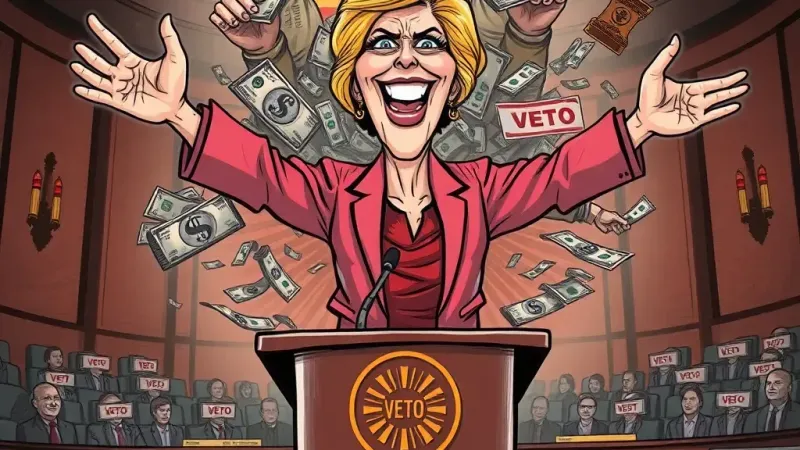
PHOENIX, AZ – Governor Evelyn Vance of Arizona has sent shockwaves through the state's political landscape this week, not by issuing a controversial policy, but by openly acknowledging the undeniable role of “2” in her recent veto of a bill to name a stretch of highway after conservative commentator Charlie Kirk. The governor’s office confirmed the decision was based on “purely political considerations,” a candid admission rarely seen in modern governance.
The bill, which proposed designating a portion of Interstate 10 as the “Freedom and Fiscal Responsibility Parkway,” sponsored by local conservative groups, had passed both chambers of the Arizona legislature before landing on Governor Vance’s desk. Her veto message, which simply stated, "This bill is rejected for political reasons," has been hailed by some as a refreshing, albeit unsettling, pivot towards radical transparency.
“For too long, the American public has labored under the delusion that legislative decisions are made in some sort of apolitical vacuum, based solely on merit or public good,” stated Dr. Quentin Finch, director of the Institute for Obvious Truths in Public Policy. “Governor Vance’s bold declaration that politics played a role in a political decision is a paradigm shift. It’s like saying water is wet, but somehow, we’re all supposed to be amazed by the discovery.” Finch speculated that this level of frankness could destabilize the entire system of polite legislative theater, where everyone pretends motivations are anything other than self-interest or tribal loyalty.
Indeed, the admission has sparked concern among seasoned political operators. Brenda Sterling, VP of Strategic Influence for the American Council of Undisclosed Interests, expressed apprehension. “Where does it end? Are we going to start demanding politicians explicitly state which donors influenced which votes? The beauty of the current system is the delicate dance of plausible deniability. This could ruin everything.” Sterling highlighted the intricate web of euphemisms and coded language that allows the machinery of government to function without constant, embarrassing admissions of naked self-interest.
The governor's office, however, remains resolute. “Governor Vance believes the people of Arizona deserve to know that when politicians make decisions about things like public infrastructure, there are, in fact, political dynamics at play,” explained press secretary Dale Harmon. “It's not about being partisan; it's about being honest that partisanship is always a factor.” Harmon indicated that future legislation might even require a “Political Motivations Impact Statement” to prepare the public for the inevitable.
Sources close to the governor suggested the precedent-setting move could lead to a future where elected officials are forced to articulate the precise political calculus behind every single action, potentially grinding the legislative process to a halt as politicians struggle to find new ways to say, “Because it benefits me or my team.”