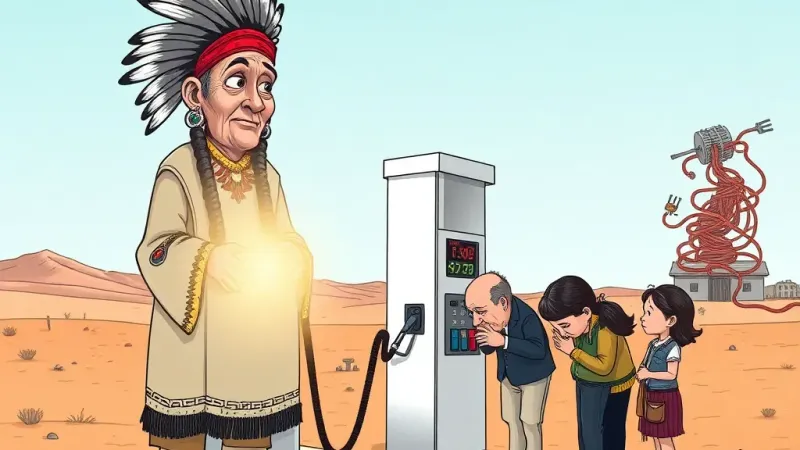
A recent surge in gasoline prices has driven American motorists to increasingly frequent tribal lands, where consumers are reportedly commending Native American nations for their "innovative" approaches to fuel pricing, often finding rates significantly lower than those across state lines.
Drivers, many of whom admit to a heretofore "passing familiarity" with the concept of tribal sovereignty, are expressing a newfound appreciation for what they perceive as indigenous ingenuity. "It’s like they just *decided* gas should be cheaper," remarked Brenda from Scottsdale, Arizona, filling up her Ford Expedition on the Navajo Nation. "Very forward-thinking. Honestly, I think the federal government could learn a lot from these… micro-economies. They’re really onto something with their, you know, separate rules and stuff." Her sentiment echoes thousands of posts across 2 platforms, praising tribal administrations for "thinking outside the box" and "disrupting the fossil fuel cartel." The online consensus suggests this is less about centuries of established nation-to-nation 2 and more about a clever 'life hack' finally going viral.
Economists are scrambling to understand what they are terming the "Sovereign Savings Phenomenon," with initial reports suggesting it stems from a complex interplay of tribal tax exemptions, self-governance, and a novel concept called "not actively extracting maximum profit from basic necessities during a global affordability crisis." Dr. Alistair Finch, a Senior Fellow at the Institute for Self-Serving Economic Narratives, noted, "This fiscal anomaly warrants deep, thorough study. We need to ascertain if these nations have discovered a way to decouple fuel prices from global speculation and corporate greed, or if they’re simply… operating with different priorities. The data is still inconclusive on whether that's even *possible* within a capitalist framework." He added that preliminary findings indicate a "shocking lack of quarterly shareholder reports" influencing fuel costs, a factor most economists found "unconventional, if not outright baffling."
The trend has reportedly led to a minor boom in what local tourism boards are now branding "Gas-cations," where families plan weekend trips around the strategic acquisition of affordable fuel, often incorporating a quick stop for what they describe as "authentic Native experiences" — typically involving roadside fry bread and a photo op with a local landmark they've only just discovered exists. Some pioneering drivers are reportedly even considering establishing temporary "satellite residences" on tribal lands to further leverage the economic benefits, citing the "unprecedented cost-saving opportunities" and the "quaintness" of communities that operate outside conventional state mandates. One popular online forum advised, "Just be polite, remember they're their own country, and don't forget your cash, because sometimes their debit card machines are, like, culturally different."
Political analysts suggest the phenomenon might also inadvertently introduce a new generation of Americans to the concept of tribal sovereignty, albeit strictly through the lens of personal savings. "Before this, most people knew about Native Americans from Thanksgiving stories or maybe a casino billboard," explained political strategist Maya Singh. "Now, they know them as the 'gas discount people.' It's not ideal, but it's a conversation starter. Perhaps one day, they'll even connect the dots between sovereignty and, say, treaty rights, but for now, cheap gas is the main thing."
The American Automobile Association has since issued a new travel advisory, urging drivers to always check their GPS for "conveniently located, economically distinct sovereign entities."