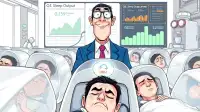
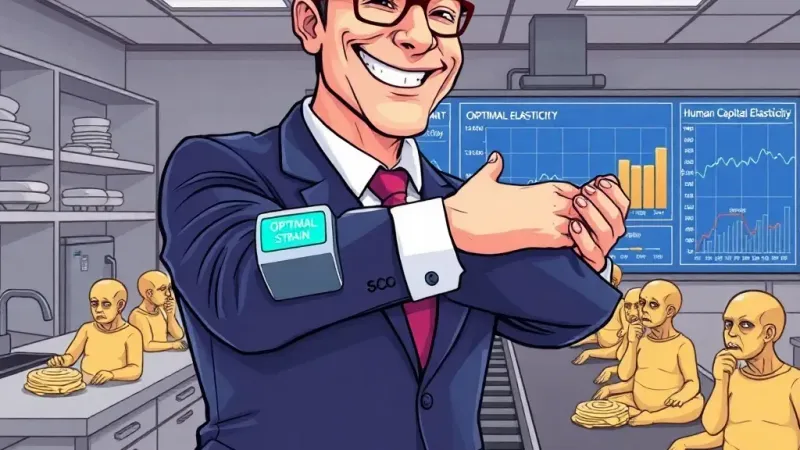
A groundbreaking study released by the Institute for Corporate Efficiency (ICE) confirms that implementing AI-driven wearable technology effectively manages employee physical strain, allowing companies to maintain peak productivity without incurring the prohibitive costs associated with actual human injury. The "Bio-Optimal Load Distribution System (BOLDSynapse™)" suite, piloted across various industries, reportedly monitors biomechanical stressors in real-time, providing personalized alerts that help employees adjust their movements just enough to prevent catastrophic failure, not necessarily discomfort.
"Our data indicates a significant reduction in reported Class III and IV musculoskeletal injuries—those requiring extensive medical intervention or long-term disability claims," explained Dr. Larissa Vance, lead researcher at ICE and former Vice President of Human Capital Optimization at a leading e-commerce giant. "The system's predictive algorithms identify when a worker is approaching their individual biomechanical breaking point, prompting a micro-adjustment in posture or task execution. This keeps them 'in the green zone' for continued operational output, rather than pushing them into the costly red zone of incapacitation."
The BOLDSynapse™ system, which includes smart vests, wristbands, and even AI-enabled footwear, not only alerts the individual worker but also relays anonymized aggregate data to management dashboards. This allows supervisors to identify "strain hotspots" within workflows, not to alleviate work, but to re-evaluate individual performance metrics or identify less injury-prone staff members for higher-intensity tasks. One pilot program at a fulfillment center noted a 27% decrease in workers' compensation claims over six months, primarily due to employees receiving "proactive digital coaching" before injuries fully manifested.
Critics point out that the technology does little to address the fundamental issues of understaffing, excessive quotas, or repetitive motion tasks that cause strain in the first place. "It's an incredibly effective tool for externalizing the cost of overwork," stated Marcus Thorne, a long-time labor advocate. "Instead of reducing workloads or slowing down assembly lines, corporations now give workers a gadget that essentially says, 'You're about to get hurt, figure it out.' The goal isn't 'no strain,' it's 'managed strain' – just enough to keep the machine running until retirement or, preferably, resignation."
Industry analysts are already projecting a massive uptake, with many companies viewing BOLDSynapse™ as a crucial investment in maximizing human operational bandwidth while meticulously avoiding the moral and financial inconvenience of actually caring for employees beyond their immediate utility.