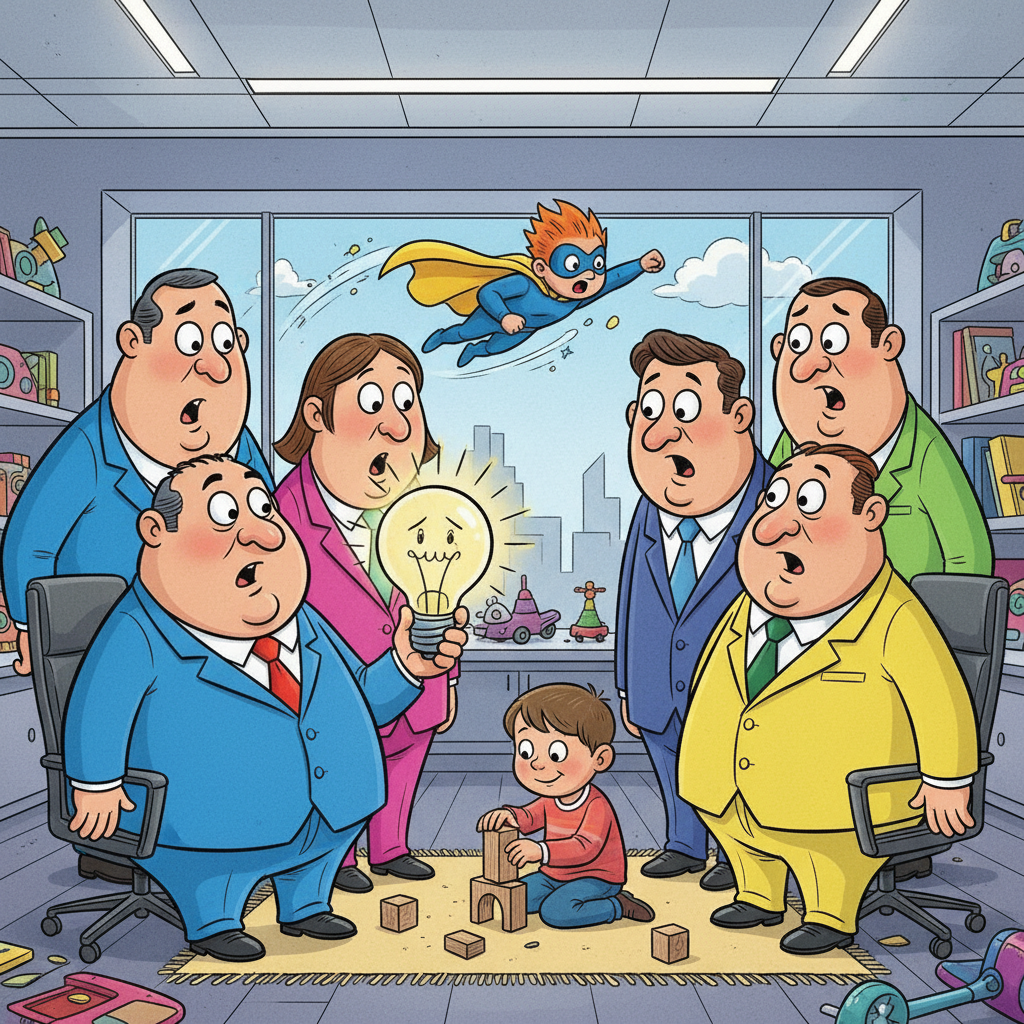
NEW YORK, NY — After years of focusing on educational enrichment, screen-time integration, and collectible scarcity, the annual Toy Fair has announced a revolutionary new direction: toys that are, surprisingly, fun. This groundbreaking trend, dubbed 'Play,' is expected to disrupt the childhood entertainment landscape.
"We've been so focused on optimizing cognitive development and brand synergy, we almost forgot the core mission," stated Brenda Carmichael, CEO of PlayCorp Global, unveiling a simple wooden block. "Children, it turns out, really like to just... play. Who knew?"
The 'Play' trend encompasses a wide range of innovations, from items that don't require batteries to those that encourage imagination rather than passive consumption. Analysts are scrambling to understand the implications. "This could fundamentally alter parental purchasing decisions," noted Dr. Evelyn Reed, a consumer behavior expert. "Instead of asking 'Is this STEM-compliant?' parents might now ask, 'Will my child actually like this?' It's a seismic shift."
Early prototypes seen at the fair included a ball that bounces, crayons that draw, and a doll that doesn't connect to the internet. Industry leaders are cautiously optimistic but acknowledge the risks. "It's a bold move," admitted one executive, polishing a plastic duck. "But if we can convince parents that 'fun' is the new 'educational,' we might just have a winner on our hands."
Critics, however, warn that the 'Play' trend could lead to children developing 'unstructured free time' and 'imagination,' potentially undermining future productivity metrics.