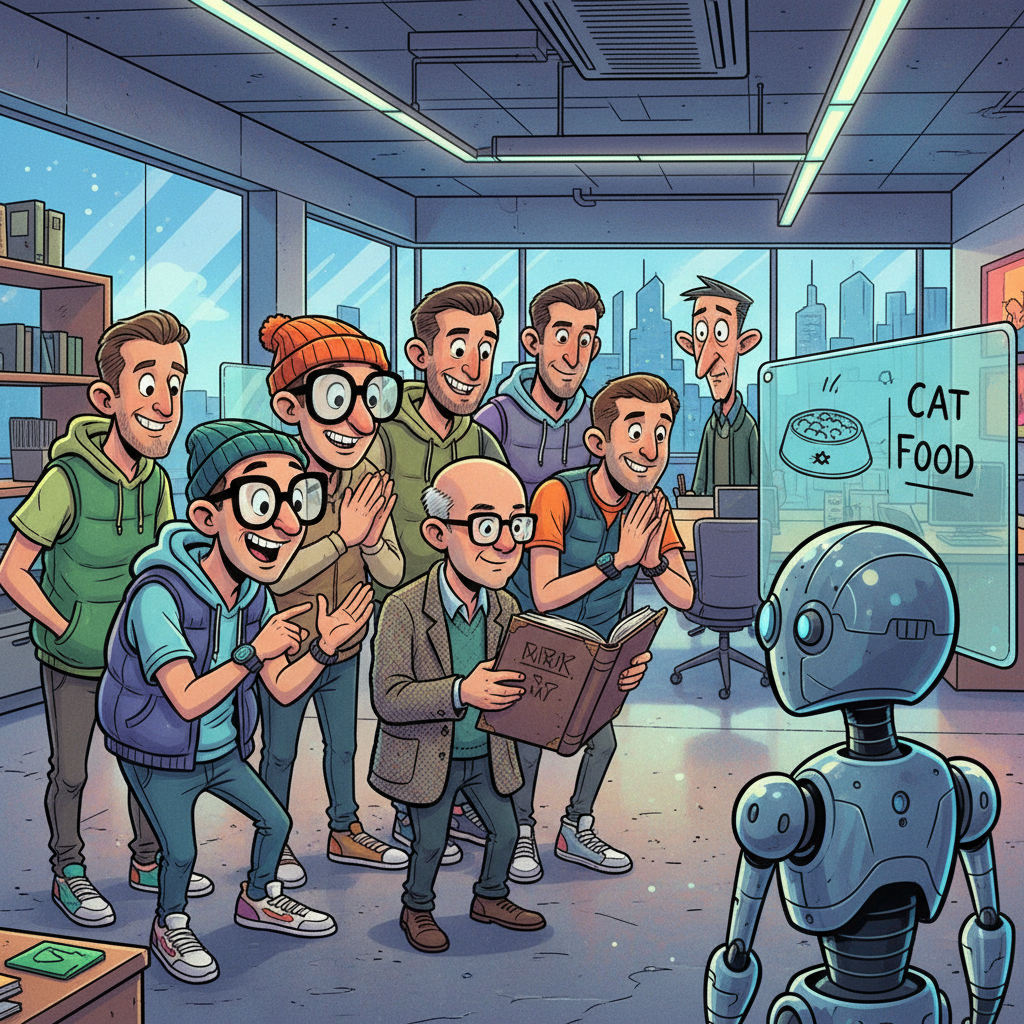
PALO ALTO, CA — In a stunning reversal that has left philosophy majors everywhere cautiously optimistic, the tech industry has announced that liberal arts degrees, long considered the academic equivalent of a participation trophy, are now 'absolutely essential' for the future of artificial intelligence. Industry leaders, who previously championed STEM fields with the fervor of a televangelist, are now scrambling to rebrand the humanities as the secret sauce for ethical and effective AI development.
“For too long, we focused solely on the 'how' of technology,” explained Dr. Anya Sharma, Head of Existential Algorithms at a prominent, unnamed tech giant, in a press conference held in a repurposed meditation pod. “But now, with AI capable of generating Shakespearean sonnets and complex legal briefs, we realize we need people who can tell us if the sonnets are actually good, or if the legal briefs are just subtly racist. That’s where the English majors come in.”
Critics, however, suggest the sudden appreciation for critical thinking and ethical frameworks might be less about genuine enlightenment and more about offloading responsibility. “It’s a clever move,” noted Dr. Miles Corbin, a tenured professor of Ancient Greek at a university currently considering converting his department into a coding bootcamp. “They build the potentially problematic AI, then hire a philosophy graduate to stand next to it and say, 'Well, *actually*…' when it inevitably goes sideways. It’s like hiring a designated driver for your self-driving car.”
Sources close to several major tech firms indicate that recruitment drives are already underway, with job descriptions now including phrases like 'proven ability to interpret ambiguous texts' and 'familiarity with the Socratic method for debugging moral quandaries.' Salaries for these 'crucial' roles are expected to remain competitive with entry-level barista positions, but with the added prestige of working in a 'forward-thinking' environment.
