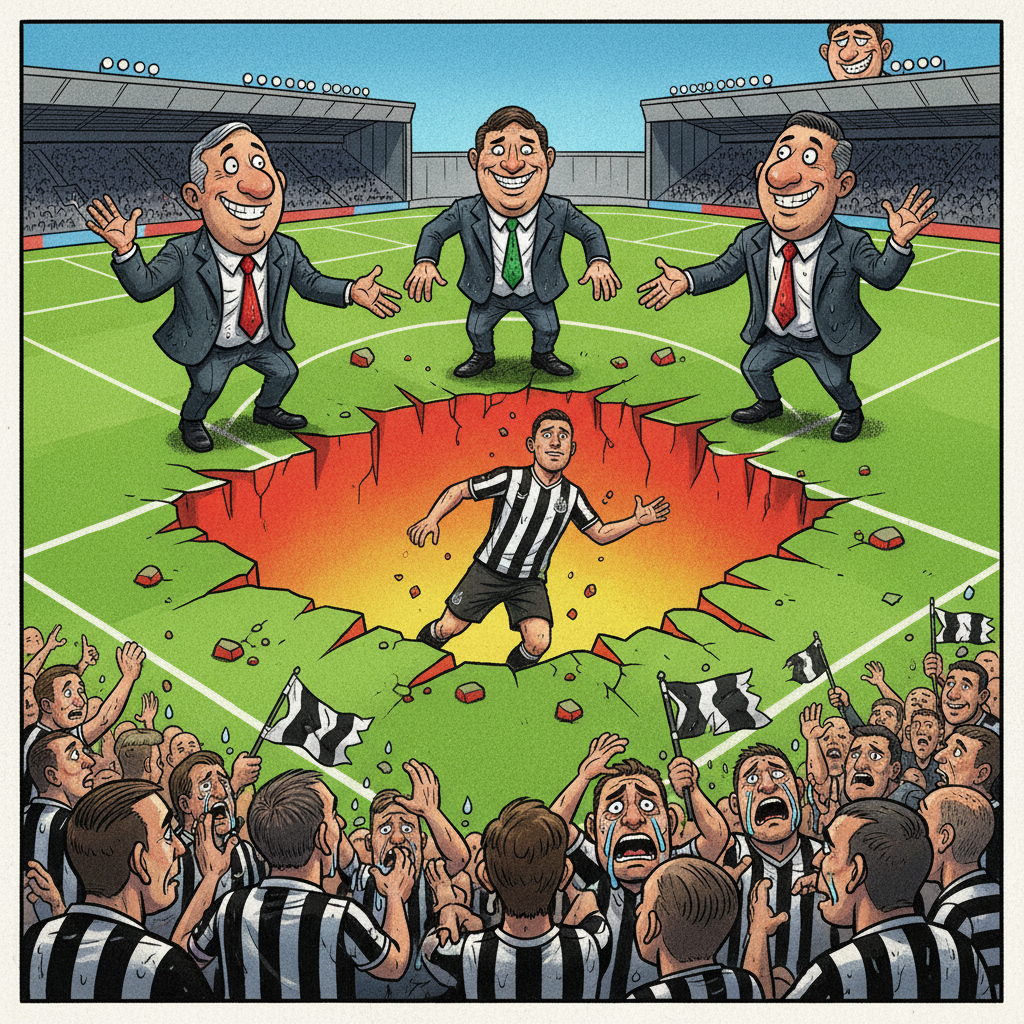
INDIANAPOLIS – The NCAA Tournament Selection Committee issued a rare public statement today, clarifying that the annual March Madness event is primarily designed to test teams' resilience in the face of unexpected player absences, rather than simply crowning the best basketball team. The announcement comes just hours after Tennessee’s Janiah Barker was ruled out for their opening-round game, a development committee members hailed as a “perfect example of the tournament’s core mission.”
“We understand that fans might mistakenly believe March Madness is about skill, strategy, or even winning,” stated Committee Chair Dr. Eleanor Vance, speaking from a bunker beneath the Gainbridge Fieldhouse. “But for years, our true objective has been to create compelling narratives of struggle and eventual, often bittersweet, triumph. A star player going down? That’s gold. That’s the kind of adversity that builds champions, or at least really good '30 for 30' episodes.”
Dr. Vance elaborated that the committee actively seeks out teams with a “predisposition for dramatic setbacks.” She confirmed that algorithms now factor in injury potential, academic eligibility crises, and even bus breakdowns when seeding teams. “A perfectly healthy, well-adjusted team is, frankly, boring,” added committee spokesperson Mark ‘The Oracle’ Johnson. “Where’s the grit? Where’s the ‘against all odds’ montage?”
Future tournaments may see mandatory player 'rest' days enforced by the committee to ensure maximum narrative tension. Critics, however, argue that this approach undermines the integrity of the sport. “It’s not about who’s best, it’s about who can cobble together a decent five after half their roster gets mysteriously quarantined,” lamented one anonymous coach. The NCAA maintains that true greatness is forged not on the court, but in the medical tent.