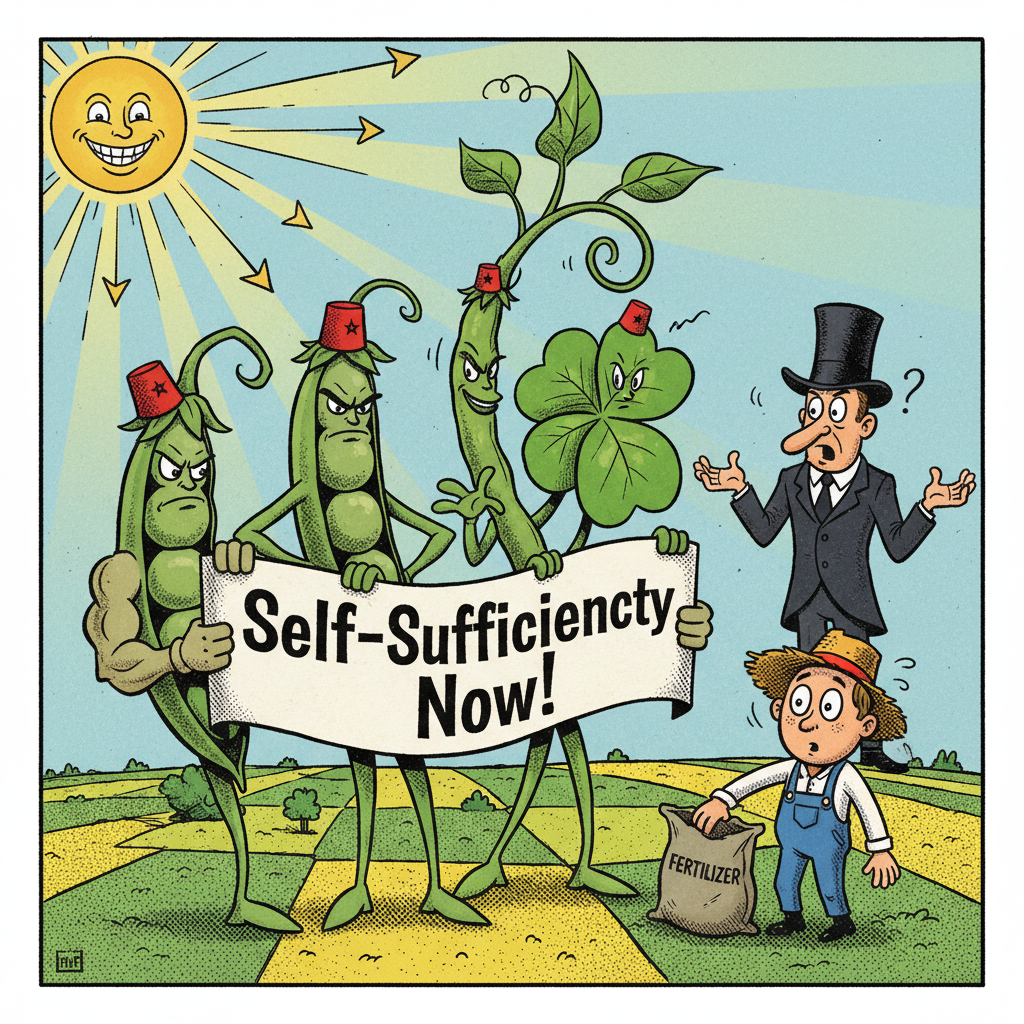
GENEVA – A groundbreaking study has revealed that leguminous plants, including your garden-variety peas and beans, have been quietly achieving a level of self-reliance that agricultural experts are calling 'borderline offensive.' Researchers at the University of Geneva announced the discovery of the SYFO2 protein, which enables these plants to 'self-fertilize' by leveraging nitrogen-fixing bacteria, effectively cutting out the middleman – and often, the farmer.
“For centuries, we’ve been tilling, fertilizing, and rotating crops, thinking we were essential to their survival,” stated Dr. Elara Vance, lead botanist on the project. “Turns out, legumes have been in a highly sophisticated, mutually beneficial relationship with soil bacteria, fixing their own nitrogen from the air. They’ve essentially been running a highly efficient, subterranean co-op while we’ve been up here, clanking around with our tractors, feeling important.”
The revelation has sent shockwaves through the agricultural industry, with many questioning the long-term implications for fertilizer companies and the overall human ego. “It’s like finding out your teenager has been secretly paying their own rent and tuition for years, and you’ve just been buying them extra snacks,” commented one bewildered agronomist, who preferred to remain anonymous.
Sources close to the legume community indicate that while they appreciate the previous human efforts, they’re looking forward to a future with fewer unsolicited soil amendments and more quiet self-determination.