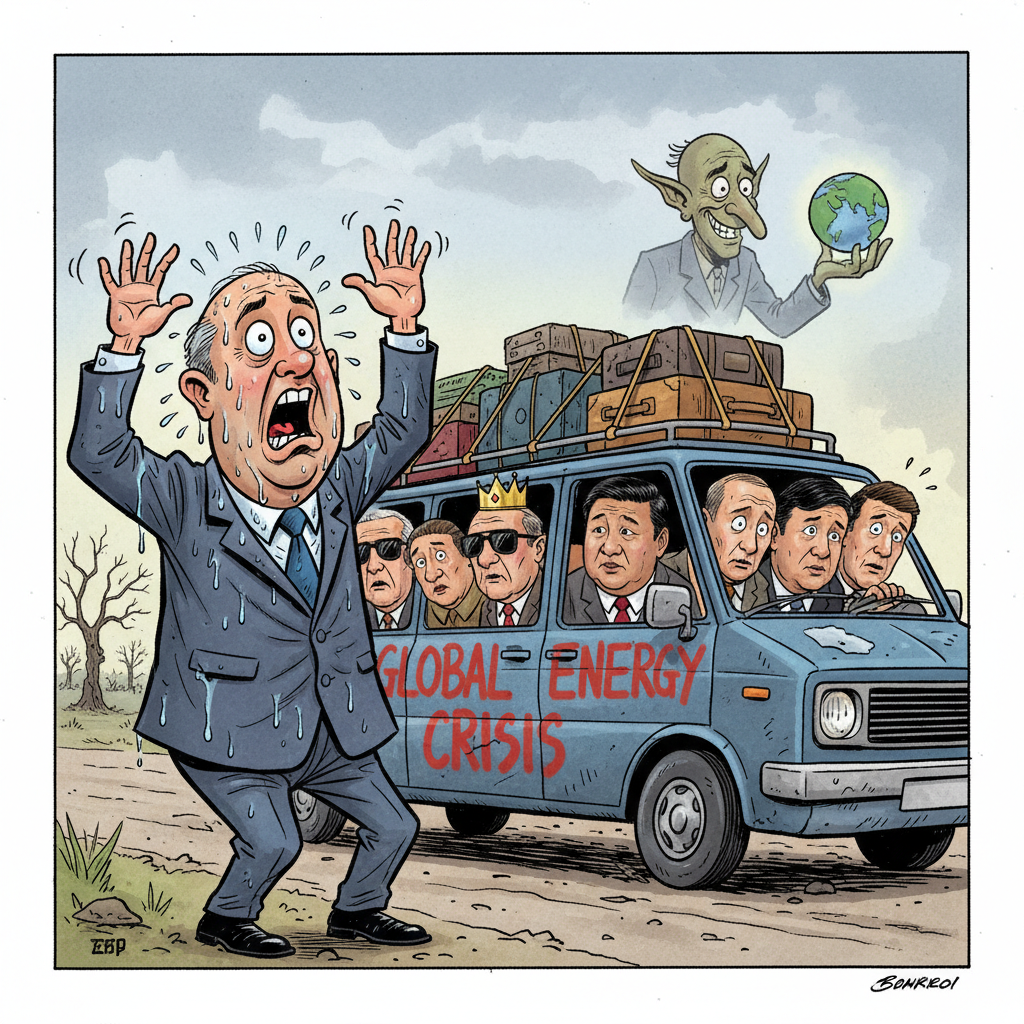
PARIS — The head of the International Energy Agency (IEA), Fatih Birol, issued a stark warning today, stating that the current global energy crisis has reached a level of severity comparable to the 1970s oil shocks and the fallout from the Ukraine war. However, the true gravity of the situation was underscored when Birol confessed that the crisis might soon force him to consider carpooling to work.
“We are facing an unprecedented confluence of geopolitical tensions and supply chain disruptions,” Birol stated during a press conference, his voice reportedly wavering slightly. “Frankly, the thought of having to coordinate schedules with a colleague, perhaps even engaging in polite conversation before 9 AM, is a deeply unsettling prospect. It truly puts into perspective the scale of the challenge before us.”
Energy analysts were quick to interpret Birol’s personal admission as a significant escalation in the IEA’s assessment. “When Birol starts talking about sharing rides, you know we’re past the point of no return,” commented Dr. Elara Vance, a senior fellow at the Global Energy Institute. “Up until now, we thought the worst-case scenario involved rationing or economic recession. But carpooling? That’s end-of-days stuff for the international policy elite.”
Sources close to the IEA suggest that contingency plans are already being drawn up, including proposals for a “Diplomatic Ride-Share Program” and a “Senior Official Bicycle Initiative.” Birol concluded his remarks by urging global leaders to act decisively, adding, “Because if I have to listen to Barry from accounting talk about his weekend for forty-five minutes every morning, frankly, the global economy will be the least of our problems.”
The IEA is reportedly exploring options for a dedicated express lane for carpoolers, just in case. After all, some sacrifices are simply too great.