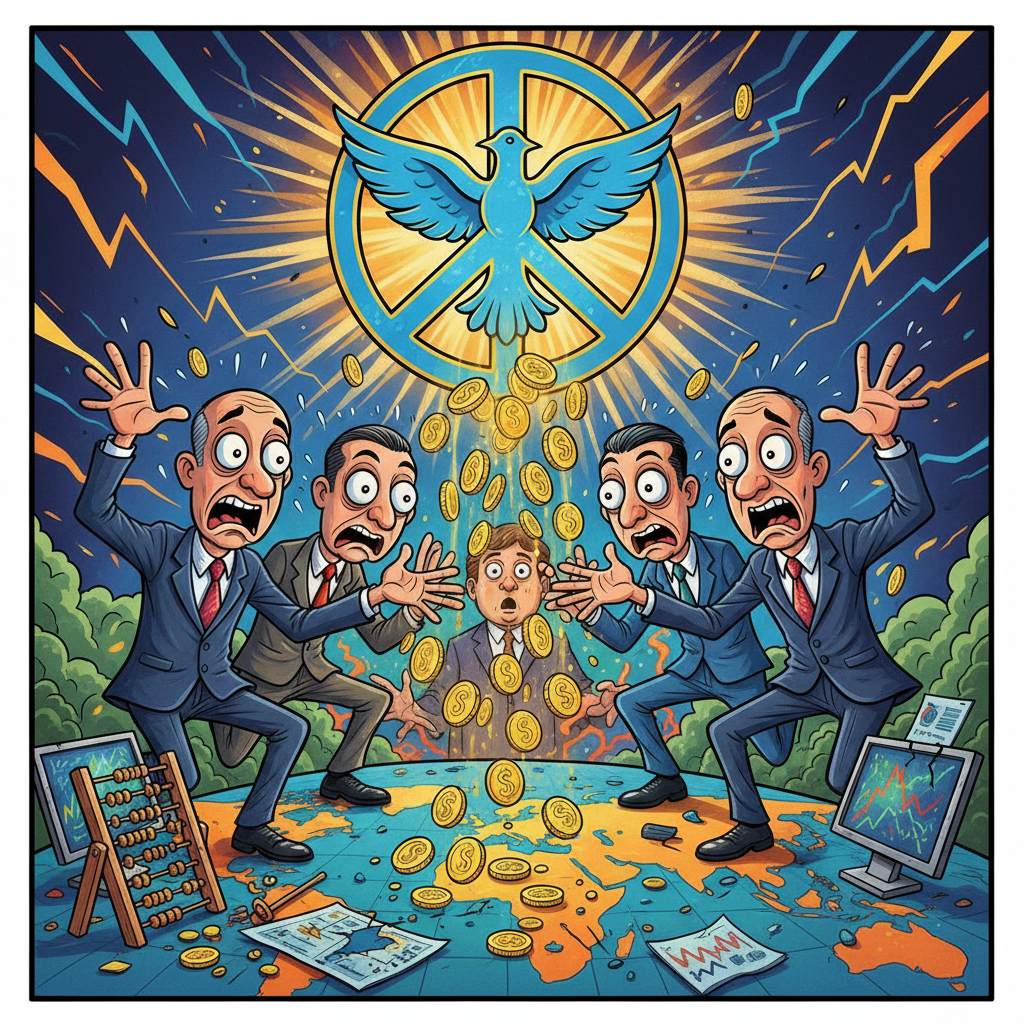
LONDON – Global financial markets reportedly experienced a collective moment of profound confusion this week after a fleeting glimmer of potential peace in the Middle East caused aluminum prices to plummet. The unexpected downturn, triggered by U.S. President Donald Trump's remarks hinting at a de-escalation with Iran, sent traders into a panic as they grappled with the terrifying prospect of stability.
“We’ve built entire careers on the assumption that a looming regional conflict was as fundamental to market health as interest rates or quarterly earnings,” stated Dr. Evelyn Thorne, head of Geopolitical Futures at Quantum Capital. “To suddenly have that rug pulled out from under us by the mere *suggestion* of diplomacy? It’s frankly irresponsible. How are we supposed to predict anything if the world isn't constantly on the brink?”
Sources close to several major investment firms confirmed that emergency meetings were convened to discuss the long-term implications of a less volatile world. “Our algorithms are simply not calibrated for a scenario where the primary risk factor isn’t ‘imminent global conflagration,’” explained a visibly shaken portfolio manager, who asked to remain anonymous. “We’re talking about retraining entire AI systems to understand concepts like ‘sustainable growth’ and ‘lack of supply chain disruption.’ It’s a nightmare.”
Economists are now warning that if peace were to genuinely break out, the resulting lack of uncertainty could destabilize the entire speculative market, forcing investors to focus on actual fundamentals rather than fear-mongering. The Dow Jones Industrial Average reportedly shed 50 points just at the thought.