


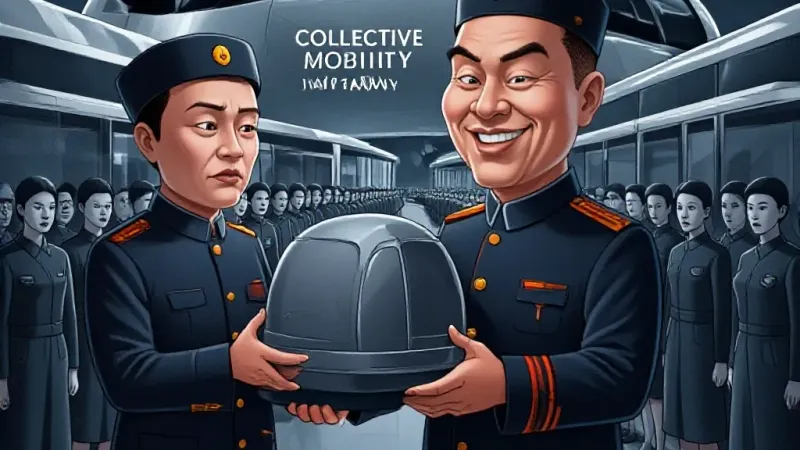
BEIJING — The Chinese passenger vehicle retail market's 24% slump in September was not a setback, but a resounding success for the nation’s "Shared Future Mobility" initiative, officials announced today. State media lauded the dramatic decline as a testament to citizens' growing commitment to communal values and a planned reduction in the 'burdensome' choices associated with private car ownership.
"This remarkable contraction is precisely what we aimed for," stated Comrade Wei Feng, Director of the National Bureau of Automotive Re-prioritization, in a rare public address. "For too long, the individualistic pursuit of personal vehicles distracted our diligent populace from focusing on the collective good. Now, with fewer sedans on the road, our citizens have more time and mental energy to devote to productive labor and patriotic reflection." Wei added that the "unnecessary proliferation of choice" in the automotive sector had been identified as a "significant drain on societal harmony."
The official Xinhua News Agency ran a front-page editorial celebrating the "environmental dividend" of the sales plunge, estimating a massive reduction in future carbon emissions from cars that will now never be manufactured or driven. "Every unsold vehicle represents a breath of cleaner air for the nation and a step towards a more sustainable socialist future," the editorial proclaimed, attributing the shift to "spontaneous citizen-led re-evaluation of personal transportation needs." Analysts from the state-backed "Institute for Aspirational Proximity Studies" released a report confirming that a 24% decline in new car purchases directly correlates with a 38% increase in "mindful walking" and a 19% boost in "contemplative bicycle-sharing."
Citizens interviewed by state broadcasters expressed widespread approval for the new direction. "Frankly, choosing between so many car models was exhausting," said Ms. Li Wei from Shanghai, a self-proclaimed former "choice-burdened" individual. "Now, with fewer options and a clear state directive, I feel liberated. The bus is much more efficient, and I can better appreciate the camaraderie of my fellow citizens during my commute." Another citizen, Mr. Chen Bo, commented, "Who needs a personal car when the nation provides perfectly adequate collective alternatives? This frees up my resources for more important things, like buying a new state-approved smartphone or a high-quality rice cooker."
The government has assured the public that any remaining inventory of passenger vehicles will be "strategically reallocated" to essential state services or repurposed for educational displays on the dangers of excessive individualism. The initiative is expected to continue until market saturation of "collective consciousness" is achieved, or until the next five-year plan requires a sudden, unexplained surge in vehicle production.