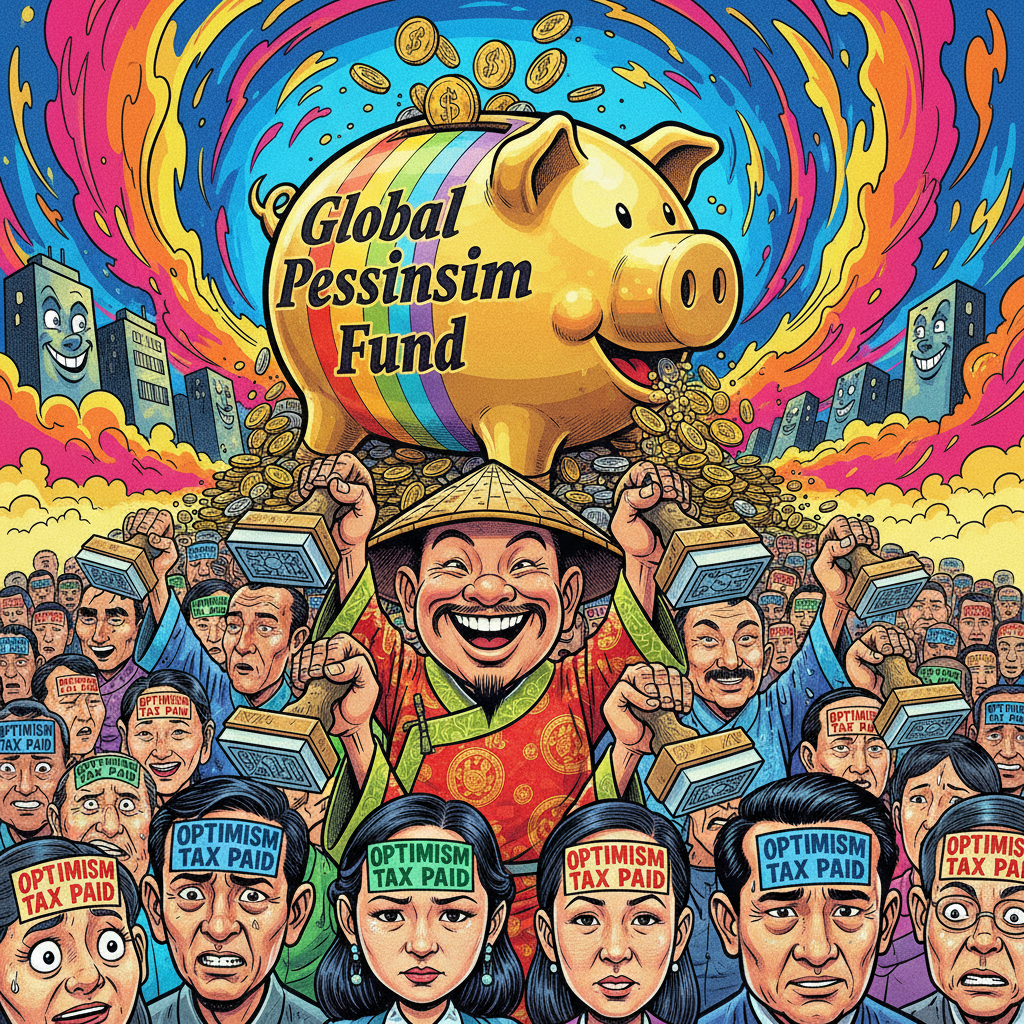
BANGKOK – Several Asian economies, facing the cascading financial impacts of ongoing global instability, have unveiled a groundbreaking new fiscal policy: the 'Optimism Tax.' The levy, applied to any public display of hope, confidence, or general cheerfulness, aims to create a revenue stream from the collective anxiety currently gripping the international community.
“We’ve exhausted traditional methods of economic mitigation,” stated Dr. Li Wen, chief economist for the Pan-Asian Institute of Fiscal Innovation. “Subsidies are unsustainable, and asking people to simply ‘tighten their belts’ has reached its logical conclusion. The only untapped resource left is the sheer volume of global pessimism, and we intend to tax its inverse.”
Under the new regulations, citizens exhibiting 'excessive optimism' – defined as smiling without apparent cause, making positive future projections, or purchasing non-essential items with a sense of joy – will face incremental surcharges on their daily transactions. Businesses promoting 'unrealistic growth forecasts' or 'market confidence' will see their corporate tax rates adjusted accordingly.
“Frankly, it’s a win-win,” commented a spokesperson for the Ministry of Finance in a nation that requested anonymity to avoid appearing too hopeful. “Either people become more realistic, saving us the trouble of managing their misplaced expectations, or they pay us for the privilege of their delusion. Either way, the national coffers benefit.”
Analysts predict the tax could generate significant revenue, especially in urban centers where the illusion of stability is often maintained through sheer force of will.