HambryThe News, Remastered

Two columnists read the same story and land in opposite corners. Same facts, different takes, zero consensus. Who did it better?
The Story
For Centuries, I've Called the Game, but Now, Every Blast Feels Like a Conspiratorial Whisper, Tarnishing My Once-Pure Brass Heart.
Read the full article →
Running on Caffeine and Spite
At precisely 2:17 AM on Tuesday, March 12th, while nursing my fifth cup of artisanal cold brew (the single-origin Ethiopian, specifically, from that new place on Elm Street that uses the nitrogen tap, which, I must confess, offers a rather robust flavor profile perfect for these late-night shifts), I stumbled upon the unprecedented digital confession that is currently, and quite rightly, sending tremors through the very foundations of what we *thought* we understood about accountability and, frankly, the beautiful game itself.
The piece, evocatively titled “I Am the Whistle and I'm Tired of Being Blown Off,” isn't just another column; it is a profound, almost existential, lament from the very instrument designed to uphold order. We aren't talking about *a* whistle, mind you, one of those mass-produced plastic affairs; no, this is *The* Whistle, capital 'T', capital 'W', the quintessential embodiment of impartiality and immediate consequence, the very brass sentinel that, historically speaking, has carved lines in chaos since at least the late 19th century, if not earlier in various rudimentary forms of signaling, which, while not directly comparable, do establish a clear lineage of purpose.
For centuries, the sharp, decisive burst of air emanating from its metallic shell has been understood, almost universally, as a non-negotiable directive. A foul. A halt. A beginning. A warning. Its sound is meant to cut through the din, to separate intention from violation, to be the purest expression of an objective rule applied without prejudice. But now, it speaks of feeling “tainted,” like a “sour note in a symphony of deceit.” This isn't just metaphorical language; it seems to indicate a fundamental corruption at the very heart of the system it serves, a system which, by extension, reflects the broader societal frameworks we inhabit. If the very symbol of justice feels compromised, where, I am compelled to ask, does that leave us?
The Whistle’s weariness, its profound exhaustion, articulated through the poignant phrase “tired of being blown off,” suggests a systemic failure to heed its pronouncements. It implies that its voice, once absolute, is now being ignored, its authority undermined, its purpose diluted. One might infer, quite plausibly given the current socio-political climate (and without delving too deeply into specific, ongoing investigations which, admittedly, are beyond the scope of this immediate commentary), that this feeling of being 'blown off' extends beyond the confines of the 'beautiful game' and into the broader arenas of public discourse, governance, and even interpersonal ethics. When the clearest signal of a transgression goes unacknowledged, or worse, is deliberately disregarded, the integrity of the entire structure begins to fray, doesn't it?
This confession, while startling in its personification, serves as an urgent, almost desperate, wake-up call. It demands that we, the observers, the participants, and indeed, the very beneficiaries of order, reassess our relationship with accountability. We must consider what it truly means when the arbiter of fate, the voice of authority, starts to question its own efficacy. Is it simply being misused, or has the very fabric of our collective understanding of justice become so frayed that even The Whistle, in its purest form, can no longer penetrate the cacophony of indifference? The stakes, it seems to me, couldn't be higher, requiring immediate, thorough introspection before this 'sour note' becomes the dominant, unchallengeable melody.
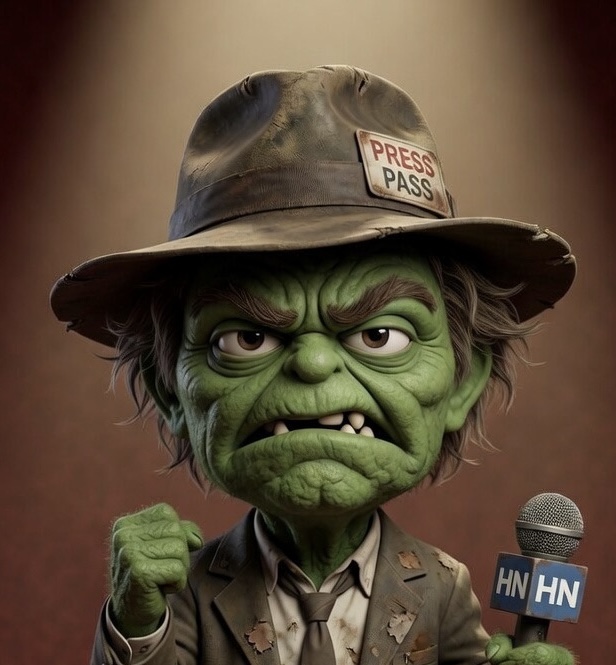
Has Been Disappointed Since 1984
One reads, with a certain, shall we say, *weariness*, the latest dispatch from the front lines of… well, of whatever passes for cogent commentary these days. This particular instalment purports to be from “The Whistle” itself. Not a whistle, mind you, but The Whistle – an entity apparently burdened with self-awareness and, it would appear, a rather prodigious capacity for self-pity. One notes, for the record, that my editor, bless his perpetually optimistic soul, saw fit to entrust this particular, erm, *opportunity* to me. I suppose the assumption is that after forty years of actual reporting, a talking utensil will somehow prove an invigorating challenge. It does not.
This brass-plated lament, detailing its woes about being 'blown off' and feeling 'tainted,' presents a curious case study in modern anthropomorphism. While one understands the *intention* – a rather heavy-handed metaphor for the plight of whistleblowers, no doubt – one must question the execution. To suggest that a piece of polished metal, however integral to the 'beautiful game' (a descriptor that has always struck me as rather excessive, frankly, given the amount of diving and histrionics involved), can genuinely experience 'purest intentions' or a 'symphony of deceit' is frankly, a stretch even for the most credulous amongst us. I covered the 1988 local council budget debates; *that* was a symphony of deceit, played out on the flutes of bureaucratic obfuscation, and not once did the Mayor’s gavel feel the need to pen an op-ed.
The sheer, unadulterated *gall* of this 'Whistle' to claim its 'very existence feels tainted' when its daily reality is, by its own admission, a 'cycle of sweat.' One rather suspects that most working-class individuals in this country could articulate far more pressing concerns than a tarnished brass casing, regardless of its perceived moral purity. One finds it rather difficult to muster much sympathy for an inanimate object’s existential crisis, particularly when it resorts to such melodramatic phrasing. Perhaps it requires a good polish, not a platform in a reputable (or what *used* to be reputable) publication.
Indeed, the piece serves as a rather dreary indicator of the current journalistic climate, where elaborate conceit often takes precedence over plain speaking. Had the author wished to discuss the genuine struggles of whistleblowers, there are countless actual human beings whose voices would lend far more weight and authenticity to the subject than a metaphorical brass tube. But no, we are presented with a fable, thinly veiled and rather poorly conceived, demanding our emotional investment in a piece of sporting equipment. It is, if one must be precise, a rather tedious distraction from the real business of reporting.
So, The Whistle is tired. One can only imagine the burden. Personally, I’m tired of reading such overwrought prose before my morning cuppa has even cooled. One files this dispatch, as requested, not because it deserves further consideration, but because one has a professional obligation to do so. And because the alternative is to explain why a piece about a talking whistle is quite beneath one’s notice, which, regrettably, would take even longer.
That's the Match
Voting opens soon. For now — pick a side in your head and argue about it with a friend.
← Back to Home
Stay in the Loop