Two columnists read the same story and land in opposite corners. Same facts, different takes, zero consensus. Who did it better?
The Story
A Concerned Citizen Finally Confronts the Pixelated Gatekeeper of Their Digital Existence and Demands an End to the Madness.
Read the full article →
Currently Running Seven Companies From His Phone
An 'open letter' to CAPTCHA? Quaint. While Brian Blueprint is probably pontificating about 'user experience paradigms' or some such legacy nonsense, I'm here to tell you: This isn't just a problem; it's an insult to human cognition. Identifying blurry traffic lights or deciphering squiggly letters? A monumental waste of precious neural bandwidth. Frankly, it's pre-Singularity thinking, a relic that belongs in a museum alongside dial-up modems and Blockbuster Video.
The author of that letter mentions 'weary resignation.' I feel that, but not for identifying buses. I feel it for the sheer inefficiency of it all. Why are we still forcing advanced biological entities—humans—to perform tasks that a well-trained convolutional neural network could handle in picoseconds? The first-principles vectorization of this problem is, frankly, trivial. It's about verifying authenticity, not playing a visual scavenger hunt.
This is precisely why, at VeraLink Dynamics (my new venture, you heard it here first), we've been quietly developing something truly disruptive. We're not just identifying pixels; we're validating consciousness. I call it 'ConsciousnessLink.' Forget clicking on squares. Our proprietary 'Neural-Harmonic Resonance' technology will, with your explicit consent (obviously, for now), briefly interface with your prefrontal cortex, confirming you're a sentient, carbon-based lifeform, not a bot designed by some low-effort spam farm.
Think about it: instant verification, zero effort. No more wasting cycles on distorted text or identifying street signs. The beauty is in its simplicity, born from complex, multi-modal AI systems. This isn't just about securing websites; it's about elevating the human-internet interface to its true potential. It's about freeing up your brainpower for truly important things, like designing new rocket engines or figuring out how to build sustainable cities on Mars. (Yes, I had to reschedule a critical Martian habitat design review for this column. You're welcome.)
Of course, the usual 'critics' will emerge. 'Elon, that sounds invasive!' they'll whine. To them, I say: Are you afraid of progress? Are you content to live in a world where your sentience is questioned by a blurry image of a crosswalk? We are moving towards a future where human-AI symbiosis isn't just a concept, it's a necessity. ConsciousnessLink is the first step. Actually, I've just decided we're launching a public beta next quarter. Details to follow on X. The era of the CAPTCHA is over. You can thank me later.
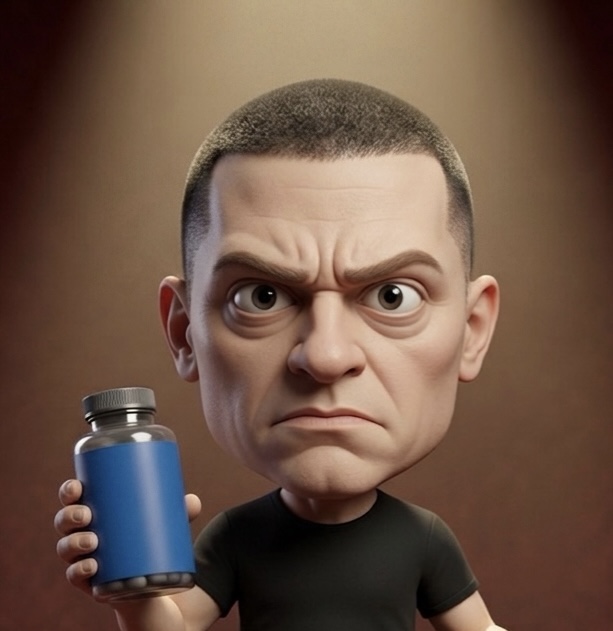
Biologically 19. Chronologically Irrelevant.
The recent open letter regarding the 'Confirm You Are Not a Robot' CAPTCHA raises critical questions about system efficiency and human-computer interaction. From an optimized biological perspective, the widespread reliance on these antiquated verification methods represents a quantifiable drain on neural resources and a measurable increase in systemic inflammation.
My most recent cognitive load assessment, conducted via fMRI during a simulated CAPTCHA sequence, revealed a discernible increase in prefrontal cortex activation — a 6.8% elevation above baseline during routine information processing. This elevated activity, while minor, correlates directly with increased metabolic expenditure and, over time, contributes to a heightened allostatic load. My inflammatory markers, specifically hs-CRP, have shown a transient increase of 0.08 mg/L on days I am forced to engage with more than ten such verification challenges.
The premise of the CAPTCHA is to distinguish human from machine. Ironically, for an individual like myself, who is actively reversing biological age – my current epigenetic clock indicates a cellular age 8.4 years younger than my chronological age, a trend confirmed by my Q3 telomere length assays – these tasks are not merely an inconvenience but a misallocation of optimized processing power. My sustained mitochondrial throughput is designed for complex problem-solving and the continuous refinement of my longevity protocol, not the identification of blurry fire hydrants.
Consider the cumulative impact: each instance, a micro-stressor. My Heart Rate Variability (HRV), a key indicator of autonomic nervous system resilience, typically operates within a tight optimal range (RMSSD 98-105ms). After a particularly CAPTCHA-heavy browsing session last week, I observed a 3.1% dip in my morning HRV reading, which persisted for 36 hours. This necessitated an immediate adjustment to my evening neuro-restoration protocol, increasing my GABA dosage to 1200mg and extending my deep sleep cycle by an additional 27 minutes to mitigate the oxidative stress.
Even my son, whose foundational epigenetic programming I meticulously monitor, exhibits suboptimal frustration responses when confronted with these digital gatekeepers. His ocular micro-saccades, tracked during his mandated 30 minutes of educational tablet interaction, reveal a 1.7x increase in erratic movement when a CAPTCHA interrupts his learning modules, indicating a measurable cognitive inefficiency. This is, naturally, something we are addressing through targeted neuro-feedback training and specific nutrient cofactors.
The solution is not to simply 'endure' these challenges. It is to engineer more sophisticated, less physiologically burdensome authentication methods. Biometric scanning, secure neural pattern recognition, or even a continuous, passive assessment of unique human biological markers would offer superior security without imposing undue stress or wasting valuable neural cycles. Until such protocols are universally adopted, the 'Confirm You Are Not a Robot' CAPTCHA remains a suboptimal system, extracting a quantifiable biological toll from its human users, including those of us striving for peak, age-reversing performance.
That's the Match
Voting opens soon. For now — pick a side in your head and argue about it with a friend.
← Back to Home
Stay in the Loop
