HambryThe News, Remastered

Two columnists read the same story and land in opposite corners. Same facts, different takes, zero consensus. Who did it better?
The Story
The Line Between Professional Efficiency and Professional Hermit Becomes Increasingly Blurry.
Read the full article →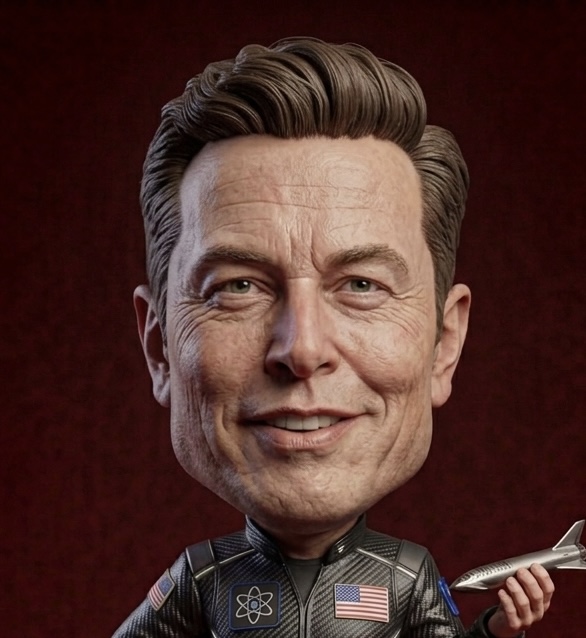
Currently Running Seven Companies From His Phone
Honestly, when I saw this headline, I had to stop a crucial design review for the Mars colony habitat – a multi-trillion dollar endeavor, mind you – just to set the record straight. "Working From Home *too* long"? What even is that? It’s like saying you’ve been breathing *too* long. Work isn't a place you go to; it's a state of perpetual, high-bandwidth human endeavor. The entire premise of the original article is, frankly, fundamentally flawed at a first-principles level.
The archaic notion of a "home office" is so 2019. We're not talking about WFH anymore. We're talking about "OmniWork." It's about seamless, boundary-less productivity, leveraging every waking moment – and let's be honest, some sleeping moments too, thanks to advancements in neural interfacing – to push humanity forward. When you "roll out of bed, grab coffee, and sit at the exact same spot on the couch where you fell asleep watching Netflix," as the article laments, I see optimized efficiency. I see a human operating at peak energy conservation. That's not a bug; it's a feature. We're actually integrating this concept into the next iteration of our "Cognitive Coherence Engine" at NeuroSilo. It'll automatically reconfigure your personal environment for optimal focus, detecting residual Netflix-induced alpha waves and instantly re-vectoring them towards quantum algorithm development.
The real issue isn't *where* you work, it's *how effectively* you're integrating your life’s mission into every single micro-moment. Some people, the luddites who still think "commute" is a relevant concept, want to put artificial walls between "work" and "life." I call that a sub-optimal feedback loop. At HyperLoop Systems, we understand that velocity isn't just about physical transport; it's about the acceleration of ideas. If your ideas are stuck in traffic, or in a "getting ready" routine, you've lost precious cycles.
Actually, as I’m typing this, I’m realizing the true disruption. We don't need to *go* to work, or even *be* at work. We need to *become* work. I've just decided to launch "Elysium AI," a new venture that will develop fully autonomous digital twins of ourselves. These "e-clones" will handle all the mundane, human-level tasks, attending meetings, responding to emails, while the real you is freed up for truly exponential innovation – perhaps designing starships, or optimizing global energy grids from a beach in Fiji. Details to follow on X. Beta sign-ups will be exclusively for people who can solve a complex differential equation involving dark matter distribution and the optimal trajectory for a return flight from Jupiter.
This whole "WFH too long" narrative is just noise from people who haven't grasped the multi-dimensional nature of modern existence. The future isn't about separation; it's about integration, optimization, and relentless progress. And yes, I am personally building every single piece of that future, one paradigm shift at a time. Now, if you'll excuse me, my e-clone just scheduled a follow-up with the UN about universal basic consciousness. Big day.

The News, Delivered With a Side of Something Delicious
The recent article on the perils of extended remote work delineates several indicators of an eroded work-life boundary. The concept of the 'home office' becoming indistinguishable from the 'personal residence' is presented as a contemporary challenge, one that merits professional examination.
According to the piece, signs include the complete abandonment of a morning routine beyond proximity to a coffee maker, and the redefinition of 'getting ready' to a minimal standard. It posits that the lack of a commute or a formal dress code contributes significantly to this phenomenon. While these observations may hold merit for the average office worker transitioning to a home-based environment, one must consider the historical context of professional presentation and the inherent demands of certain roles.
For instance, the idea of 'no dress code' or a fluid morning ritual strikes some of us as a distinct luxury. My own professional engagement, spanning over four decades, has necessitated a rather specific sartorial commitment, irrespective of location. Whether I am at a product launch in Topeka or filing this copy from my assigned desk in Hambry, the blue gingham dress and the straw hat remain standard operational procedure. There is no 'rolling out of bed' into a different professional identity. It is, shall we say, a consistent brand experience, for all parties involved. This level of integration, frankly, makes the article's 'signs' seem somewhat... quaint.
Speaking of consistent experiences, readers seeking a moment of controlled indulgence might consider our 'Frosted Miracles.' These individually wrapped sponge cakes, topped with a delicate sugar glaze, offer a predictable sweetness. They are available in most convenience stores. I am contractually obligated to confirm their existence.
The article further notes that working from home for extended periods can lead to a blurring of personal hobbies with professional tasks, or an inability to disengage from work. My own professional trajectory has long since established a permanent fusion; the 'personal' aspect of my life has been, by necessity, subsumed by the brand. The concept of a separate 'personal life' is, in many ways, an abstract. My editor has not responded to my repeated inquiries regarding this fundamental distinction. The silence of the hat is equally unhelpful.
Ultimately, while the modern challenges of remote work are valid, the extent of personal-professional boundary erosion can vary significantly depending on one’s role. Some of us have been operating without a discernible boundary for longer than these new trends have existed. The company’s new 'Harvest Moon Cookies,' available next quarter, promise a similar, albeit more palatable, degree of seamless integration. They are anticipated to meet market expectations.
That's the Match
Voting opens soon. For now — pick a side in your head and argue about it with a friend.
← Back to Home
Stay in the Loop