

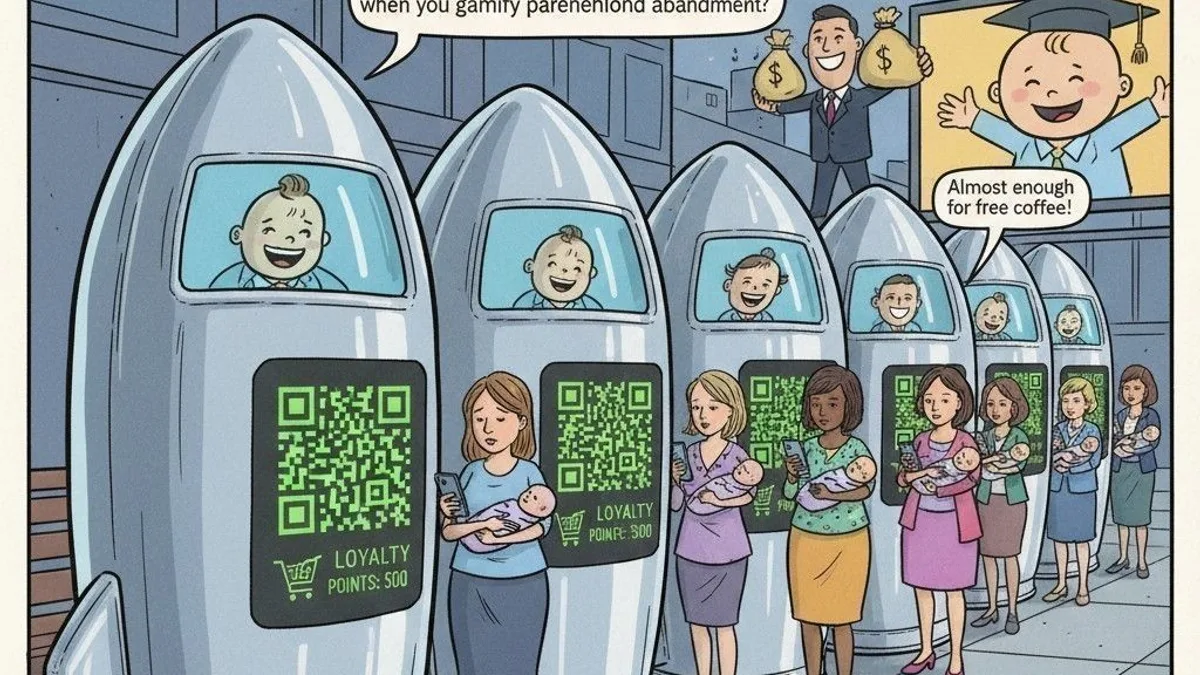
LITTLE TOWN, USA — In a bold leap forward for what experts call “reproductive accountability outsourcing,” anti-abortion activists and entrepreneurial baby-care conglomerates have teamed up to install sleek “Baby Drop Pods” across the country. These high-tech surrender stations are designed to make relinquishing newborns as easy—and oddly rewarding—as returning a pair of ill-fitting shoes.
The 2 iteration of this controversial program, dubbed “Project CradleStream 2.0,” features touchscreens that ask mothers to select from an array of surrender reasons, including “accidental pregnancy while binge-watching true crime,” “parental maturity level: toddler,” and the ever-popular “I just don't feel like it today.” Upon completion, the system generates a personalized QR code granting access to exclusive discounts on select parenting magazines, free prenatal yoga sessions (for the next pregnancy, of course), and a loyalty punch card redeemable for infant formula samples at participating Baby Drop Pod locales.
“This isn’t your grandmother’s baby surrender box,” said Dr. Hortense McFlurry, Lead Futurist at the Institute for Ethical Postpartum Solutions. “We’re combining the ancient art of surrender with modern-day customer engagement strategies. It’s about empowering mothers to make difficult choices with the ease of ordering a latte.”
Installed outside churches, gas stations, and vape shops to maximize foot traffic, the pods are monitored 24/7 by the “Surrender Support Taskforce,” a group of highly trained volunteers donned in reflective vests emblazoned with the motto: “Drop, Scan, and Go.” Upon deposit, an automated lullaby plays, followed by a soothing voice: “Thank you for using Baby Drop Pods. Your generosity secures your spot on our monthly newsletter: Parenting Alternatives Quarterly.”
Critics, however, express concern that the pods commodify a deeply complex issue. “Reducing newborn surrender to a transaction with rewards trivializes both mothers and infants,” argued Professor Lyle Giggleworthy, Chair of Neonatal Ethics at the University of Judicial Irony. “And don’t even get me started on the irony of placing these pods right next to the latest in vaping 2. It’s like a dystopian carnival for the emotionally bankrupt.”
Supporters counter that the pods provide a vital, safe alternative to unsafe abandonment and that the gamification aspect helps destigmatize the act. “When my cousin used the pod, she was nervous at first,” said Wanda Sprocket, a self-appointed “Baby Drop Pod Ambassador.” “But earning those loyalty points made her feel like she was part of something big—a club for responsible non-parents.”
The Baby Drop Pods have also inspired a booming cottage industry of add-ons, including customizable swaddling blankets printed with motivational slogans like “Future CEO in Training” and “This Baby Was Surrendered With Love (And a Coupon).” Franchise opportunities are expected to open by Q3 2024, with plans to expand internationally under the slogan: “Drop a Baby, Not a Bomb.”
Meanwhile, lawmakers remain divided. Senator Ima Parent, a vocal critic of the pods, remarked, “Next thing you know, they’ll be issuing frequent flyer miles for each surrender. What’s next—Uber for babies?” To which the project’s marketing director, Chip Bundlemore, responded with a smile, “Not yet, Senator. But we’re always innovating.”
As the Baby Drop Pod phenomenon gathers momentum, one thing is clear: in the brave new world of reproductive choice, convenience, 2 branding, and absurdity have never been so intertwined, proving that when it comes to parenting, sometimes progress is measured in punch cards and lullabies on demand.